CONSERVATION OF OLD DHAKA CENTRAL JAIL HISTORY, HISTORICAL BUILDINGS & DEVELOPMENT OF SURROUNDINGS AREA
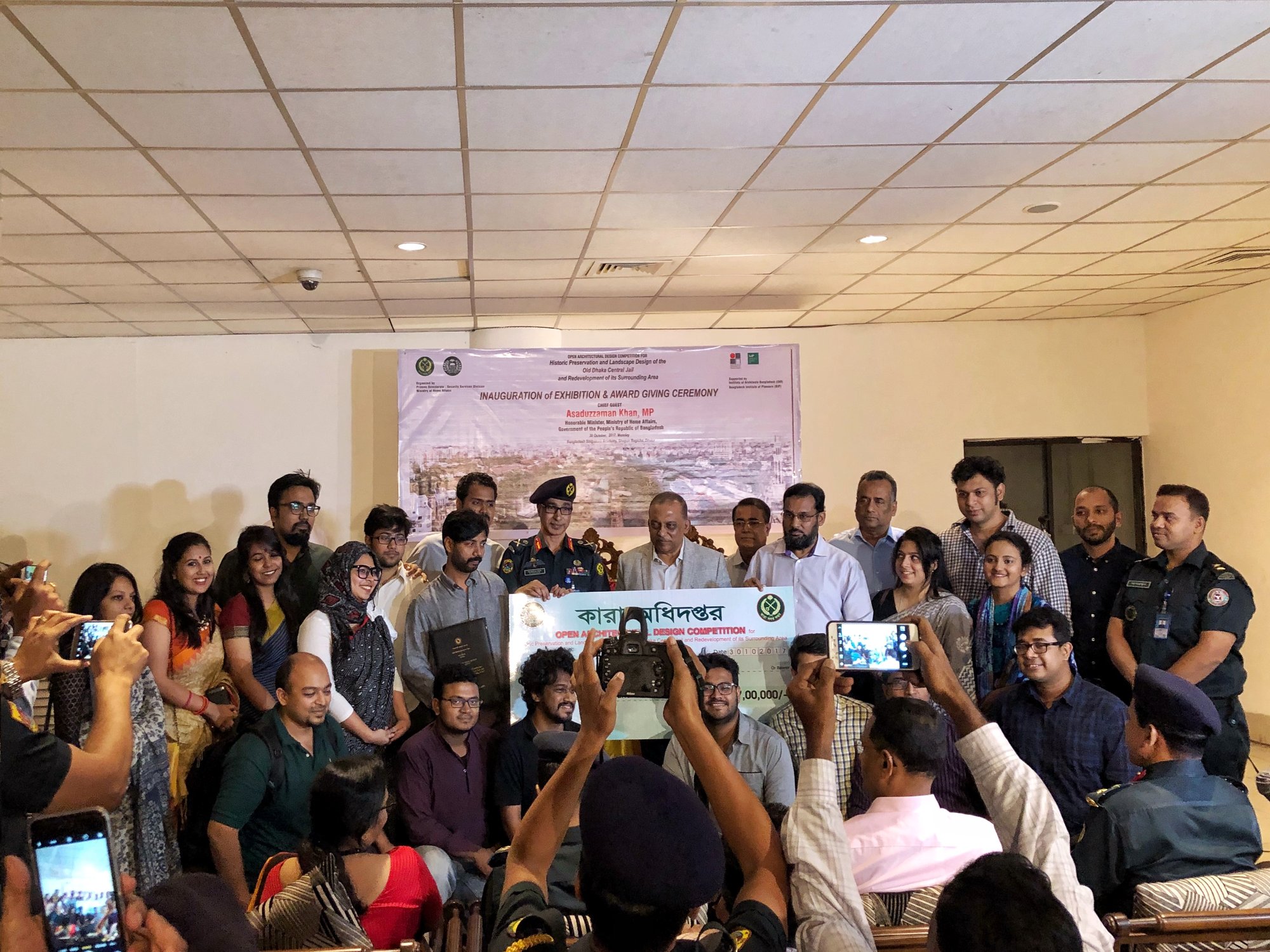
1st Prize Winning Entry of the design competition "Historic Preservation and Landscape Design of Old Dhaka Central Jail and Redevelopment of Surrounding Area" (Organized by Prisons Directorate, Security Services Division, Ministry of Home affairs, GOB, Supported by Institute of Architects Bangladesh and Bangladesh Institute of Planners). Among the final submissions from 34 teams, our team has been awarded with the honor by the respected jurors.
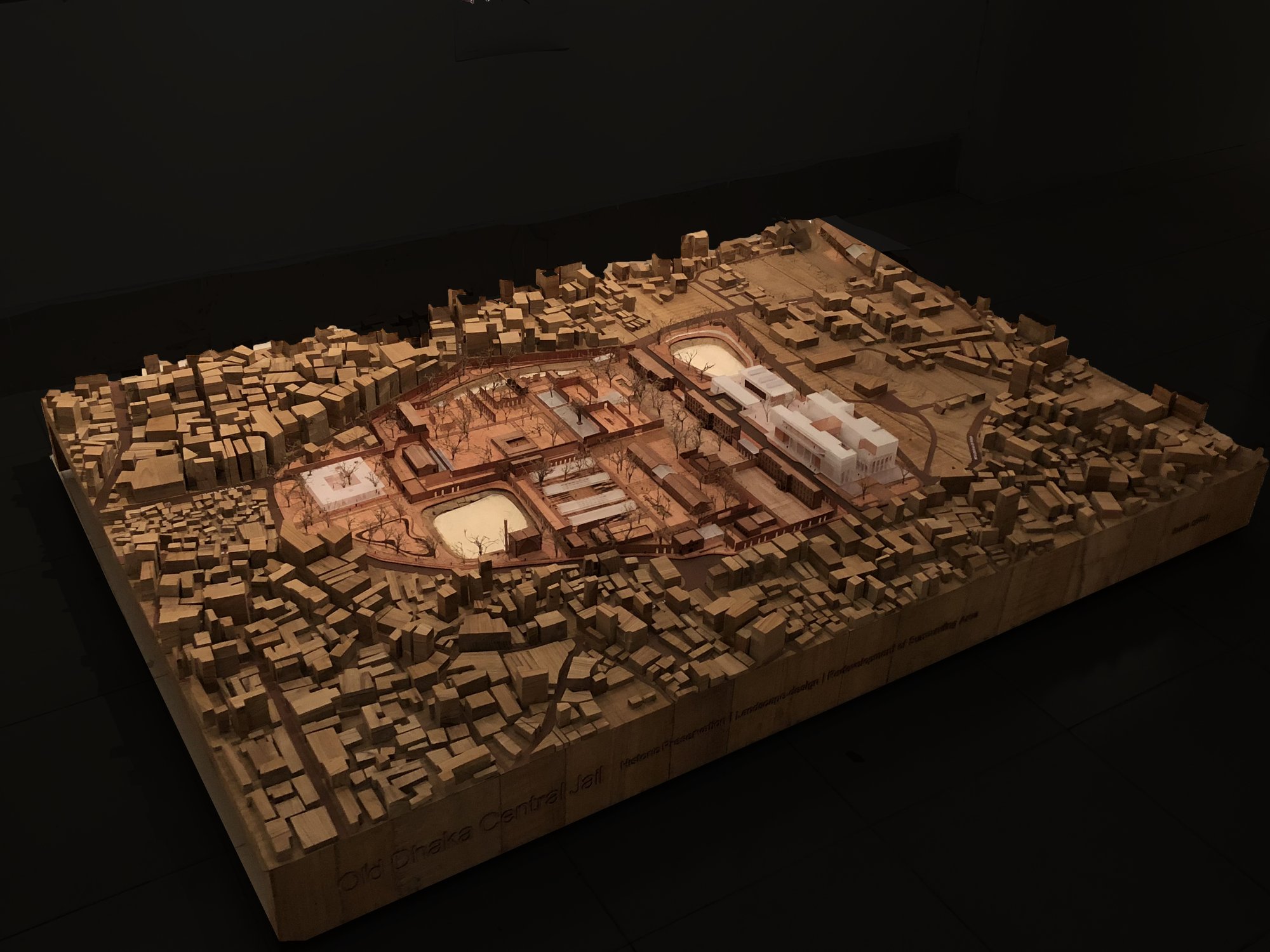
Old Dhaka Central Jail has passed many phases as an integral part of the history of Dhaka and has come at the verge of serving the present need. As a transition from the past history to a vibrant future, a design idea was generated that gives the experience of the significant past as well as a relief space, accommodates the vibrant urban life of old Dhaka.
Site location : 30/3, Umesh Nandakumar Dutta Rd, Dhaka 1211
Site area : 25.63 ACRES
Client : Prisons Directorate, Security Services Division, Ministry Of Home Affairs, Gob
Structural Consultant : SB Consultants Ltd.,Texture Engineering Consultant Ltd., TDM Consultants Ltd.
MEP consultants : SM Engineering Solution, Falcon Engineering And Construction, Shams Engineering
Photographer : City Syntax, Four Corners
Project status : On Going
The Central Jail bears a legacy more than 400 years old with history and context of Old Dhaka which proves that many important structures and architectures flourished all over the Old Dhaka throughout this timeline. Prior to 1608, before the arrival of Mughals the Jail area which is the site of the project was used as Afghan Fort ruled by the governors descending from the Delhi Sultanate. From1608-1768 during Mughal Period Nawab Ibrahim Kha built there a fort that was demolished by earthquake. Afterward, Islam Kha rebuilt the fort in 1638. There was a palace, a court and a mint (takshal) inside the fort where the maximum important public services were carried out. Around 1702, a market named ‘Padshahi Bazaar’ (presently Chawk bazaar) was built on the south corner of the fort by Nawab Murshid Kuli Khan. The city expanded around the ‘Padshahi Bazaar’ and some connecting roads were built around the market and ‘Bakshi bazaar’, ‘Dewan bazaar’, ‘Pilkhana’,’ Mahut-Tuli’ areas and people started to live and work in those areas. The central business district (CBD) was formed around the ‘Chawk bazaar’ and the Jail area was known as Badshahi Fort. Around 1800 the British Rule took over the fort area and converted into a prision and lunatic asylum. Until 2016, when the prison was relocated, it has remained the Central Jail of Old Dhaka.
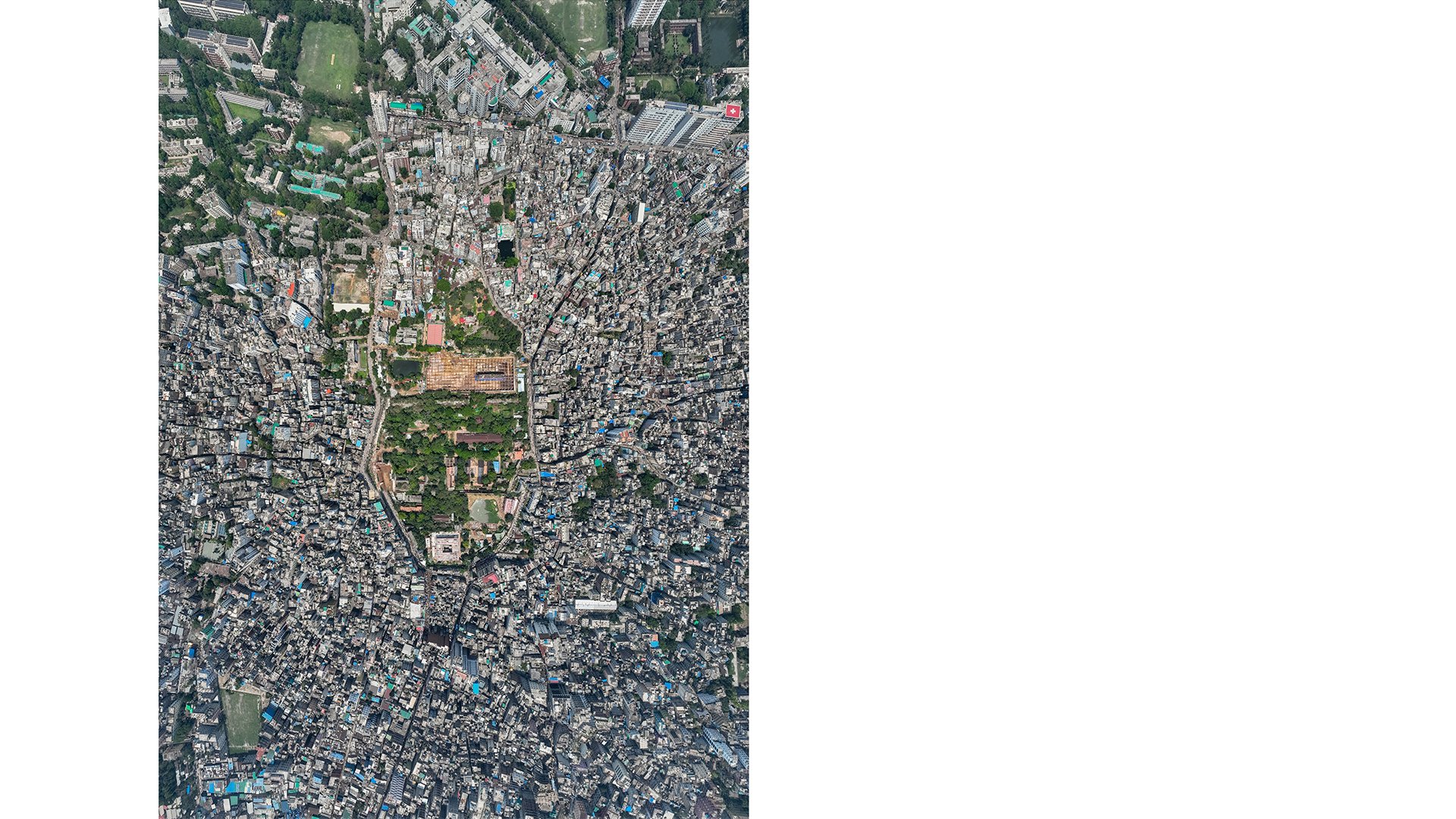
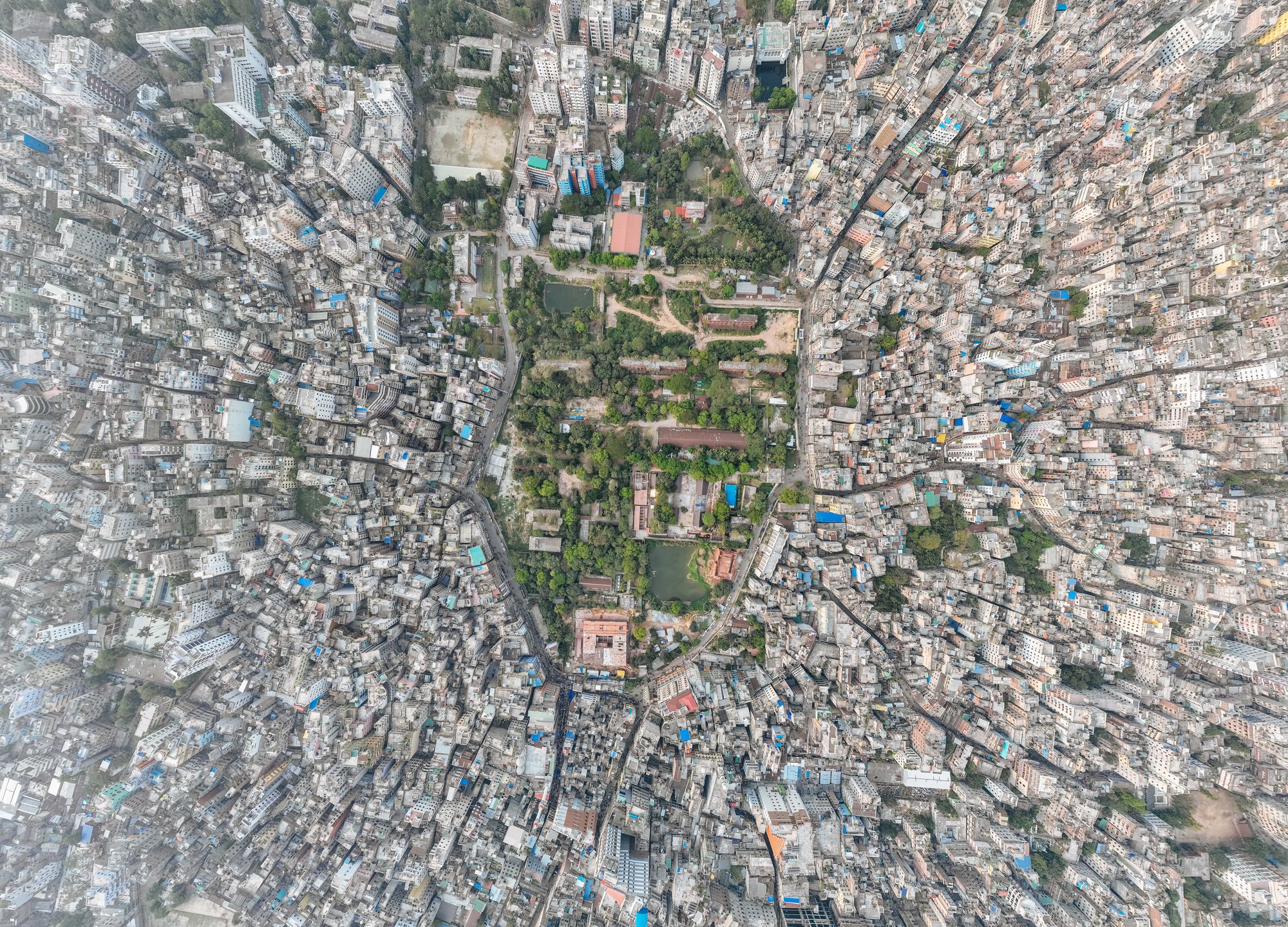
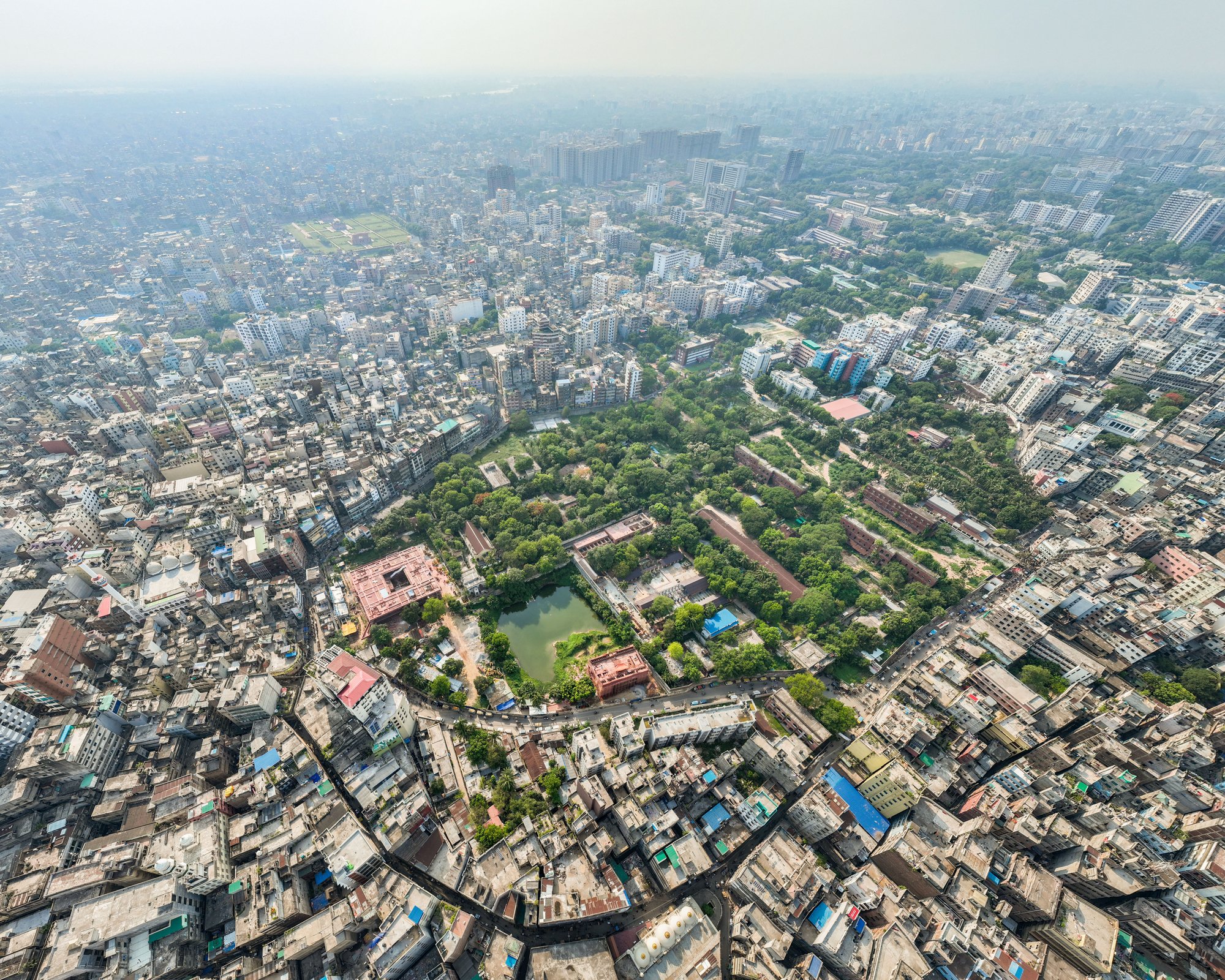
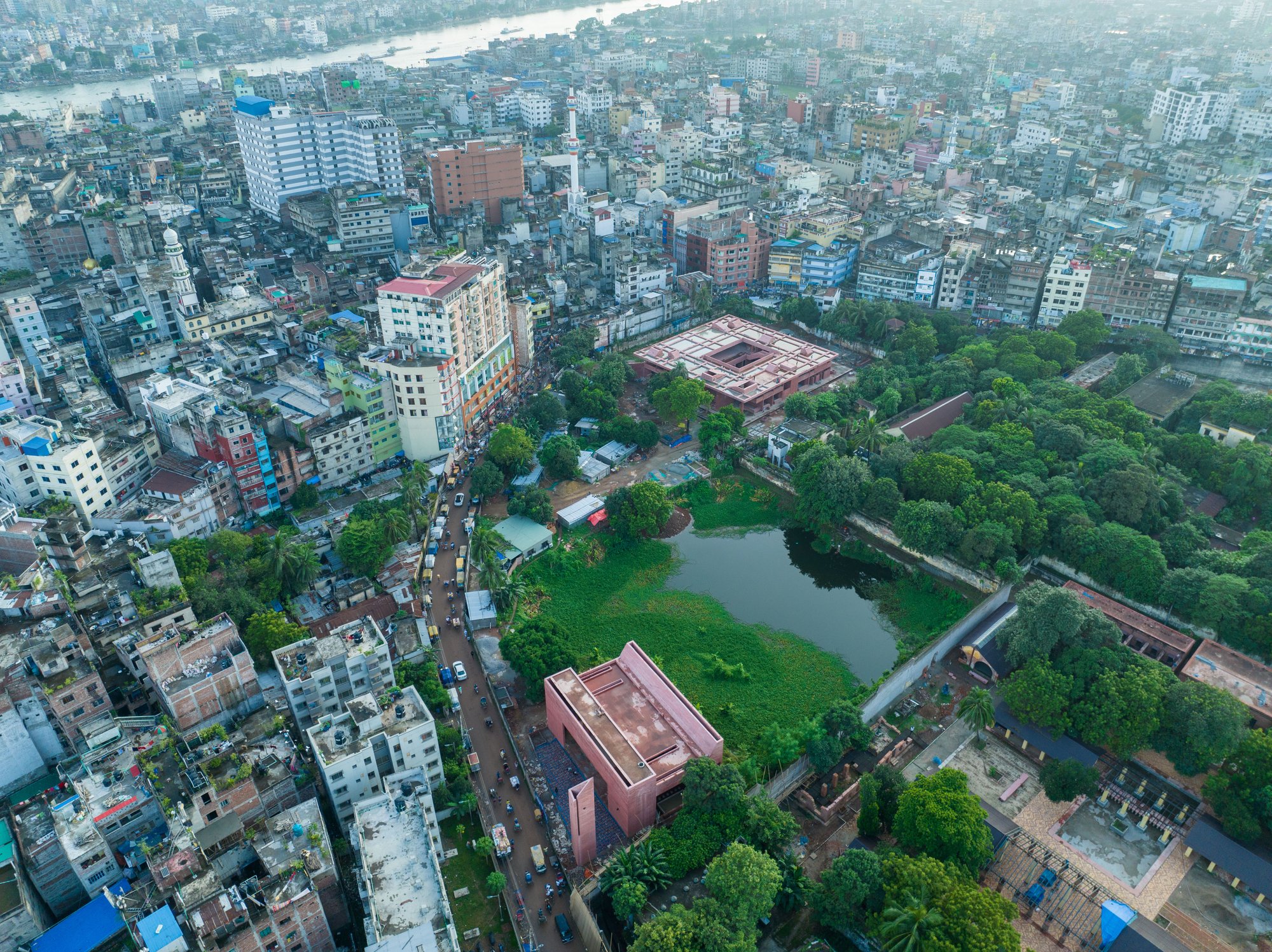
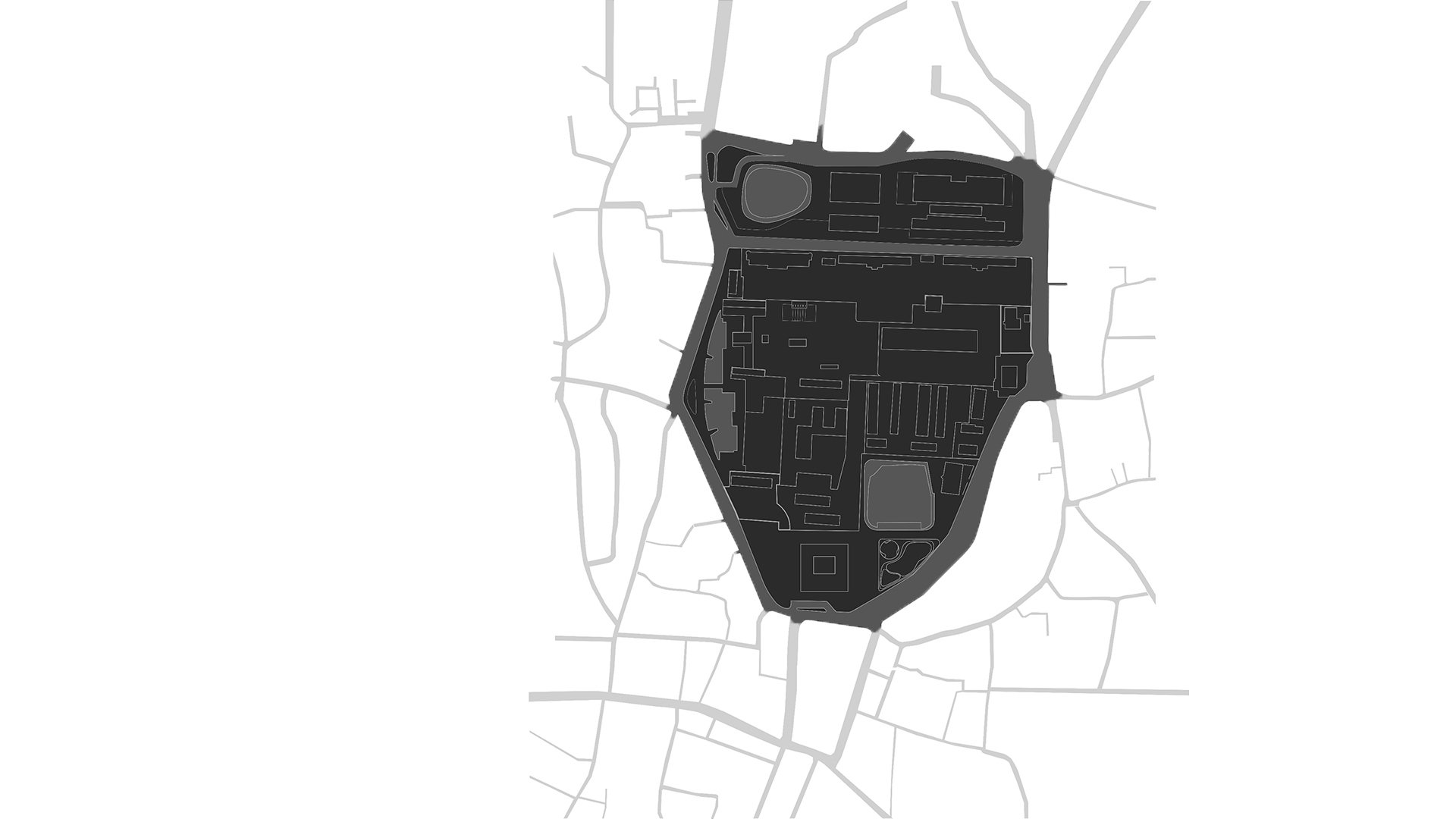
Old Dhaka city in present time is a melting pot of culture and history. The densely packed city has historic buildings lost in the chaos of the growing and developing city. In the middle of this stands old Dhaka central jail preserved in time. It is the only chunk of green space available in the densely packed area. After the central jail had been relocated a competition had been arranged, to propose a public space for the people of the community. The aim of the project was to create a public sphere for the people of the surrounding area, providing much needed amenities for the residents as well as highlighting the rich history of the site. That is how the design for the redevelopment for old Dhaka central jail and surrounding area came to be.
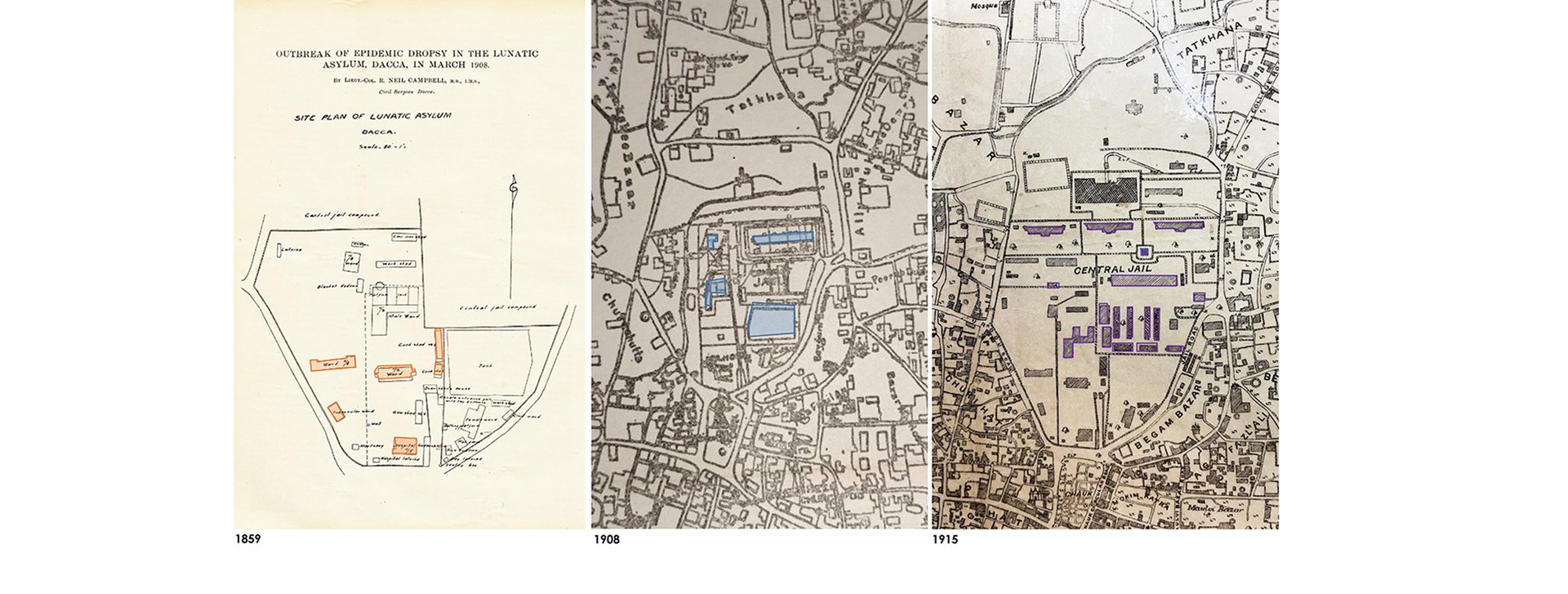
SITE PLAN OF BADSHAHI FORT: 1859
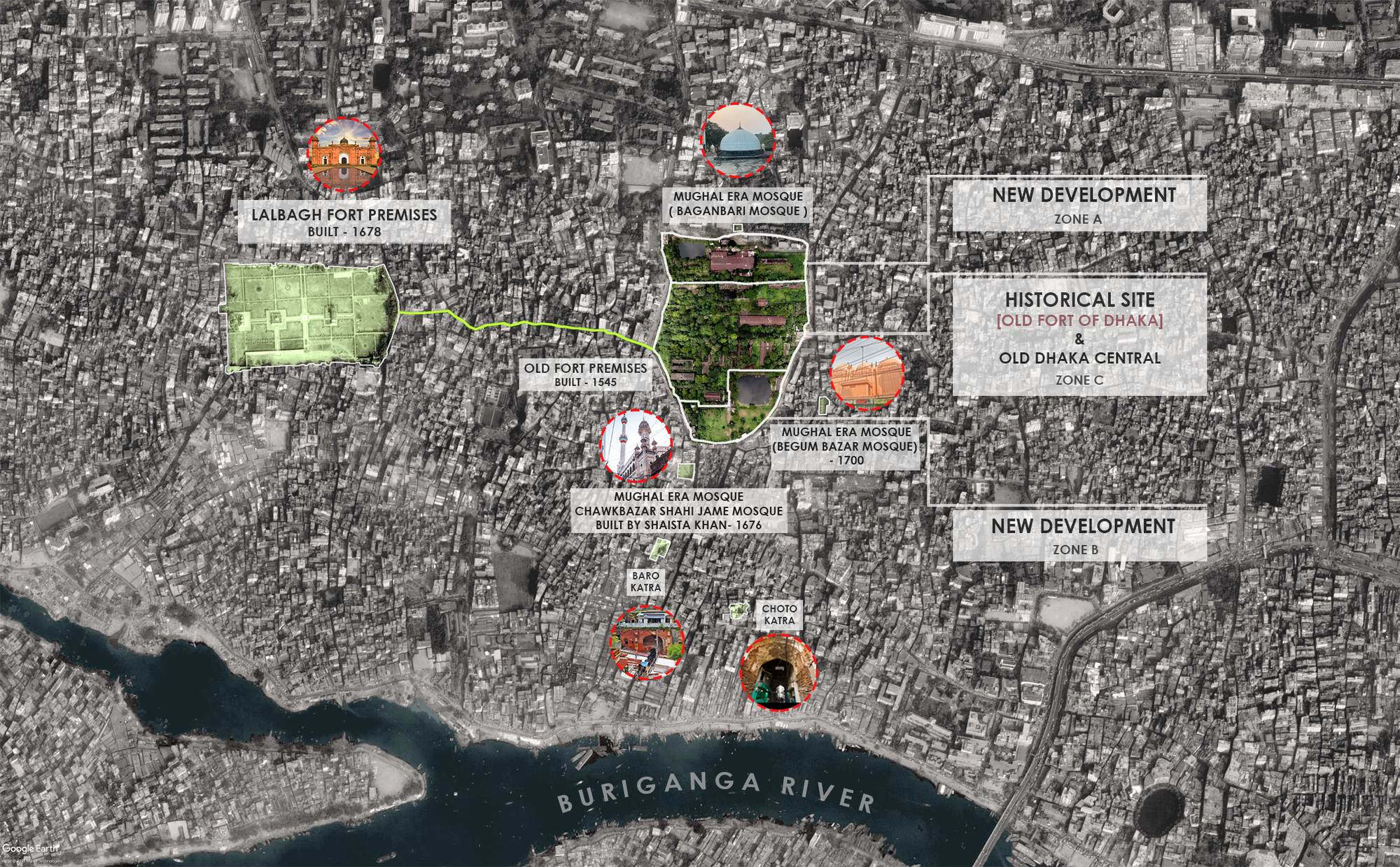
The old Centrail jail was previously Badshahi Fort of the Afghans, used by the Mughal official in 1700 A.D. Later on, the surrounding context evolved into chawk, mohollas to meet the necessities of growing urban life. Traces of structures of the marked places on the map can still be found in present time
SITE PLAN OF LUNATIC ASYLUM : 1908
The British converted the fort into jail in early 1800 .The first traceable mental services set up was built in Dhaka in 1815 (/1819). It was built in a place named muralibazar (murli bazar) which was at the back of the former central jail of Dhaka sharing the same enclosure. This phase of the site being a lunatic asylum introduced some more structures that have remained until now.
SITE PLAN OF CENTRAL JAIL: 1915
Throughout the British rule followed by the Pakistani period and afterwards the site has been used as a jail. While the surrounding area developed and morphed this site with the boundary mostly remained untouched with few reconstruction. Many of the buildings seen in the maps from British period can still be seen today.

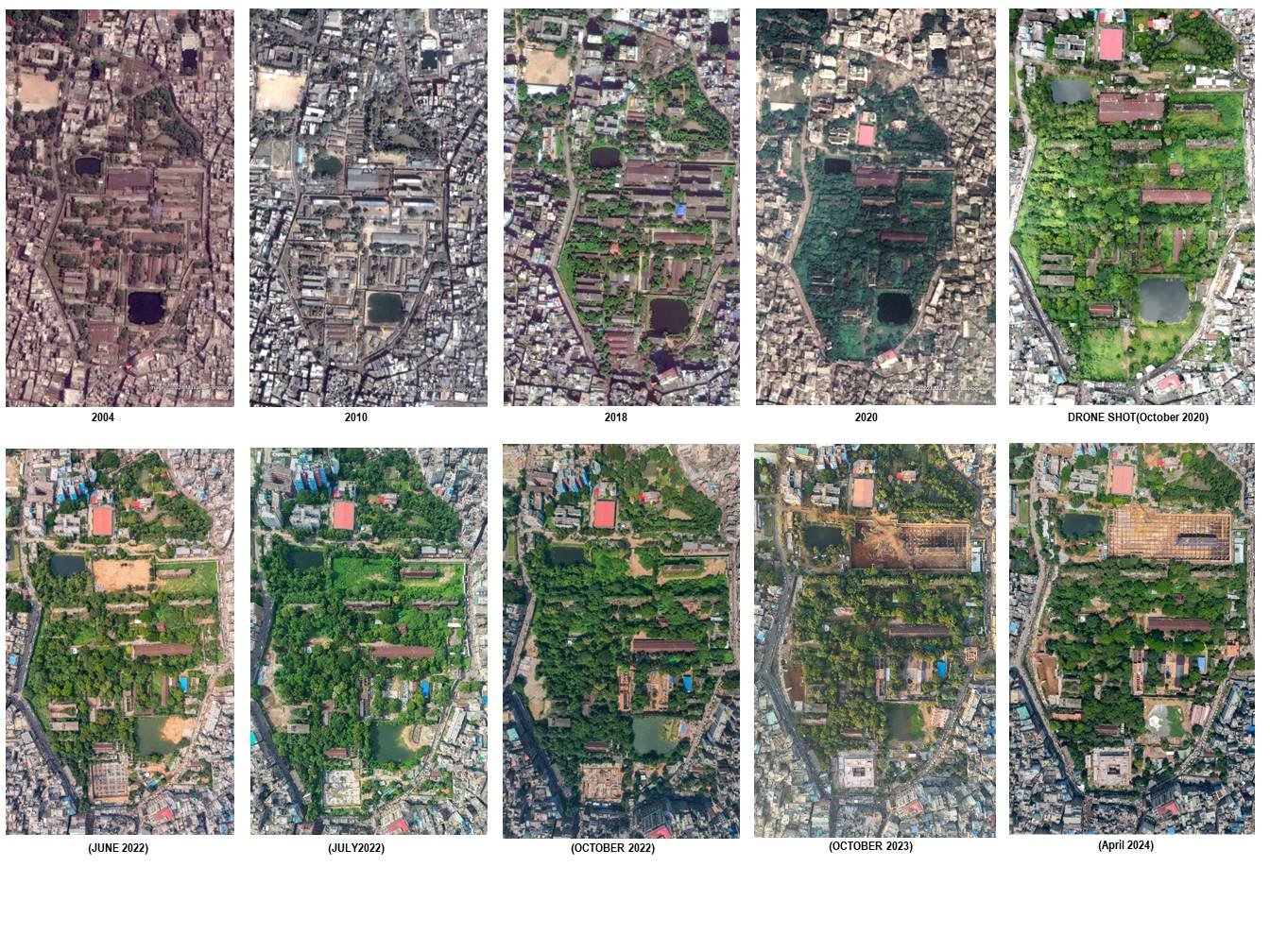
At present, the jail area sits in the middle in the Old Dhaka covering an area of 27.62 acres within the perimeter of the central jail. In contrast with the surrounding areas, the site has rich vegetation and a large amount of open space with water bodies. As the area was used as Jail for almost 228 years (1788 - 2016), the compound contains richest history of Old Dhaka. But the potential of the site remains hidden to the general people. Besides that, the site houses some colonial buildings with some strong evidences of sociopolitical history of Bangladesh. And also, after an extensive archeological survey and excavation, some remains of the old Afghan fort have been found as rich historical evidences. The rich landscape and heritage value of the site must be acknowledged, preserved and accessed by general people. Also, the site will come in hand with endless possibilities of solving relevant urban issues of Dhaka city and providing many desired civic facilities for the people of Old Dhaka.
The design was done keeping a number of things in mind, firstly being making the impenetrable wall more approachable. Apertures in the boundary wall make the site more accessible to the people and make the site inviting, both physically and visually. Internal and surrounding road networks have been modified to improve the overall urban fabric of the area. But mostly the history of the site has been preserved and handled with care.
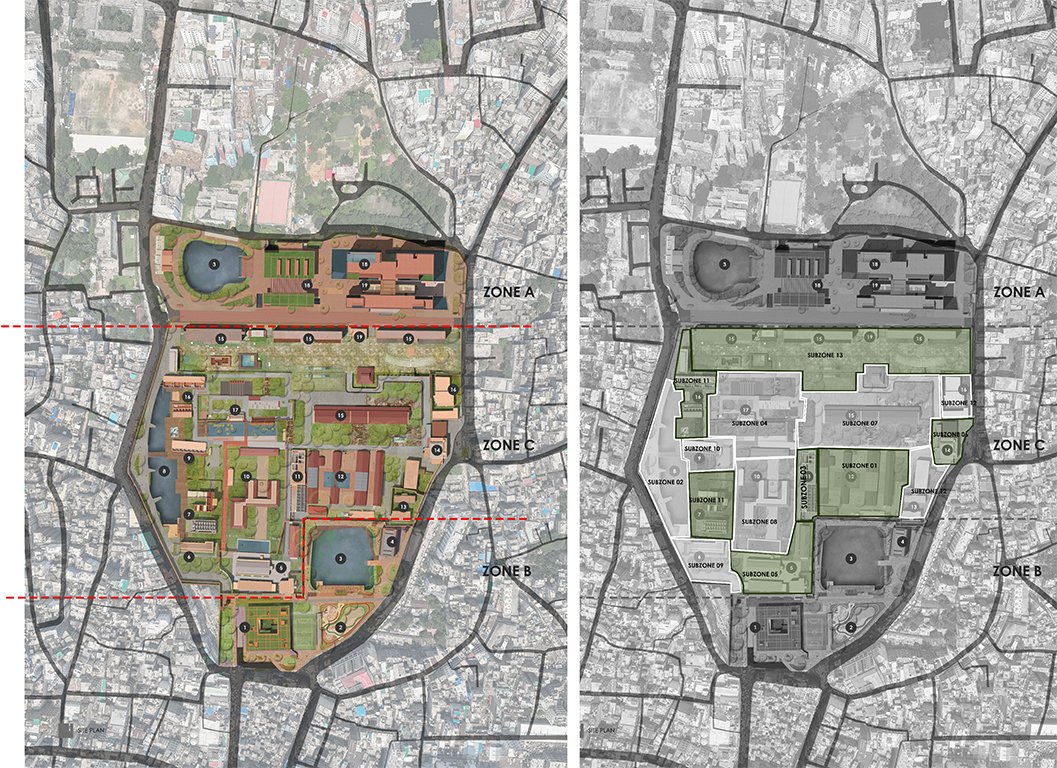
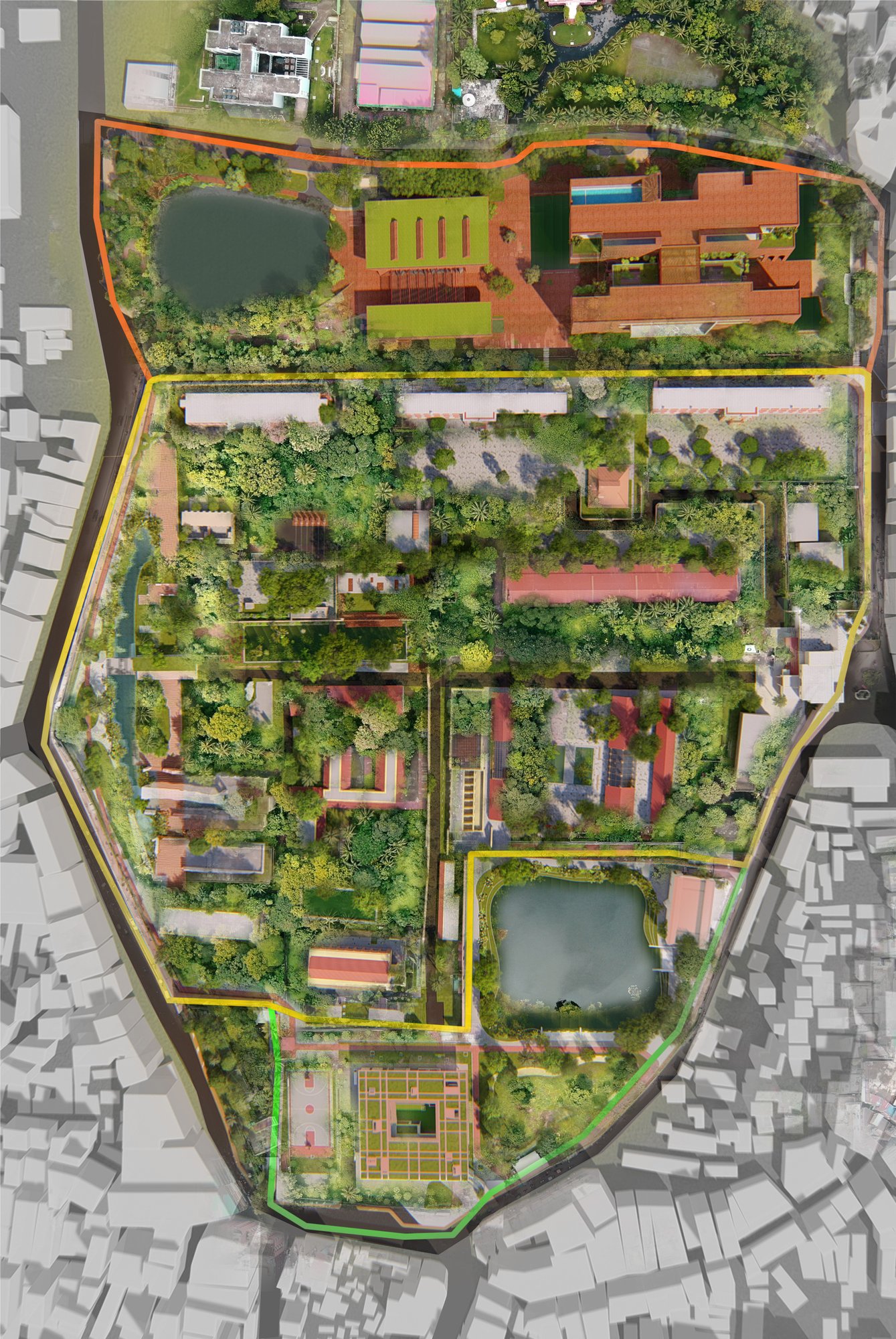
ZONE A – MULTI PUPOSE COMPLEX
is designated for regional use. To host occasional, regular and every day users the activities are composed to meet every need. It will enhance commercial activity along with new infused social recreations. This zone holds multipurpose space, Cineplex, swimming pool commercial spaces, food court, traditional food market and many such facilities.
ZONE C – CONSERVATION AND MUSEUM
is perceived as of national interest. Marked in the history of post-independence of Bangladesh, Central Jail has an important stance. It will include 43 no's of Historic Buildings and Components for Preservation, Conservation and Renovation, Reuse of Existing Significant Buildings, Landscape development. For the ease of working and to divide the area according to activity function and historical background, this zone has been divided in 14 subzone, 13 of which are marked, and the periphery wall surrounding the wall being the final subzone 14.
ZONE B – CHAWK COMPLEX
is the reminiscence of the old Chawk area. It will be used by the local users more frequently. Shops, Play fields, Public amenities, mosques are the functions social dimensions added to zone B.
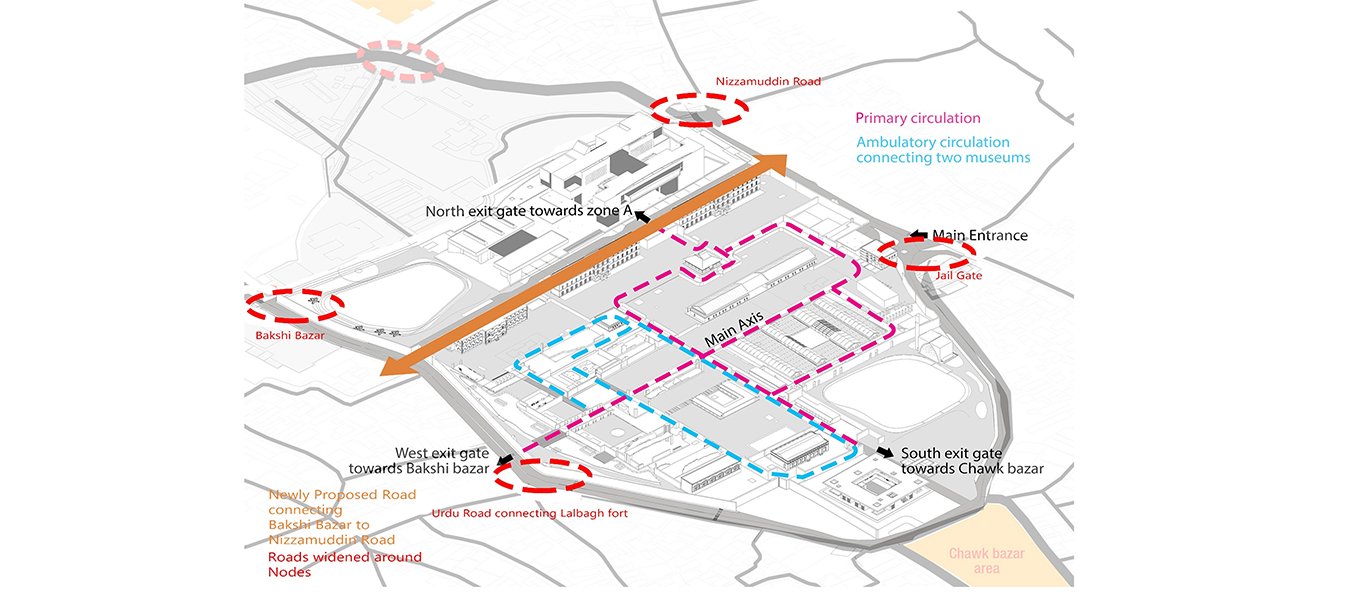
This part of old Dhaka is densely populated. The site is surrounded by some of the major nodes of the area like Nizzamuddin Road, Urdu road, ChawK bazar and Bakshi bazar. These areas have large food markets, wholesale markets and is one of the most prominent commercial spots of the city. More over the site is also surrounded by many historic sites, thus it is also frequented by people near and far. Because of this, its is not unnatural that the nodes face a lot of traffic. The design aims to mitigate this problem by enlarging the roads in the periohery of the site especially the node. A new road throught the site connecting Nizzamuddin Road and Bakshi Bazar further aims to reduce the traffic congestions in the area.
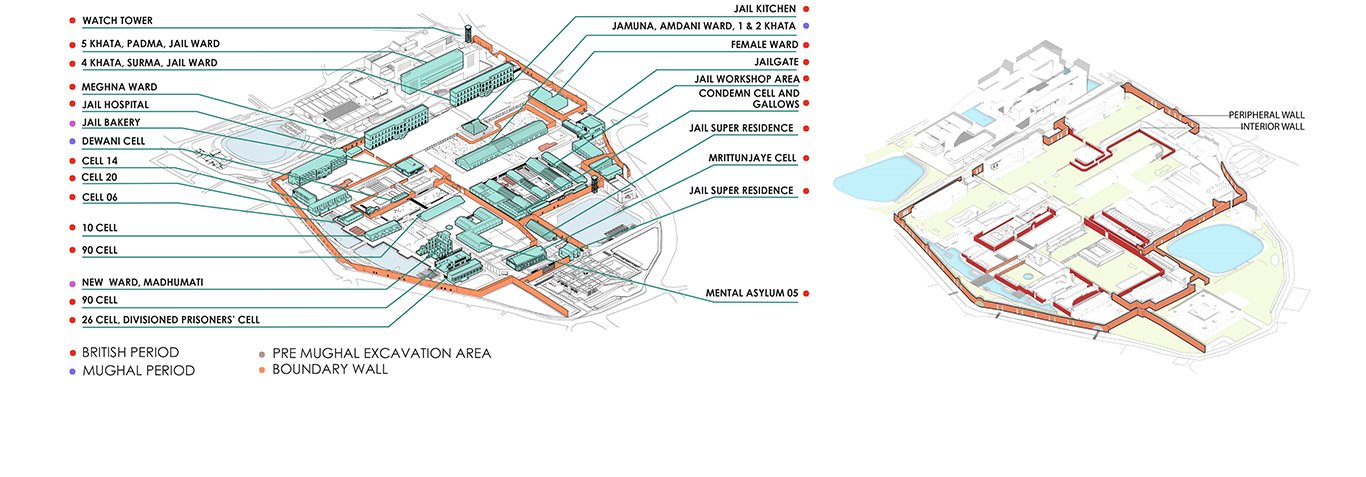
The site originally comprised 109 historic structures, of which 43 have been preserved. Each building underwent a detailed survey to analyze its architectural style and determine the period of its construction. During the conservation process, layers of plaster were carefully removed to reveal any hidden architectural features that had been obscured over time due to successive renovations.The original function and design intent of the buildings were identified and thoughtfully integrated into the new adaptive reuse plan. These preserved structures have been repurposed as display galleries, multipurpose halls, cell life exhibits, and a library.To ensure safety and longevity, the buildings were structurally reinforced for modern use. Any new additions or amenities have been introduced with minimal intervention, using contrasting materials to clearly distinguish contemporary elements from the original fabric
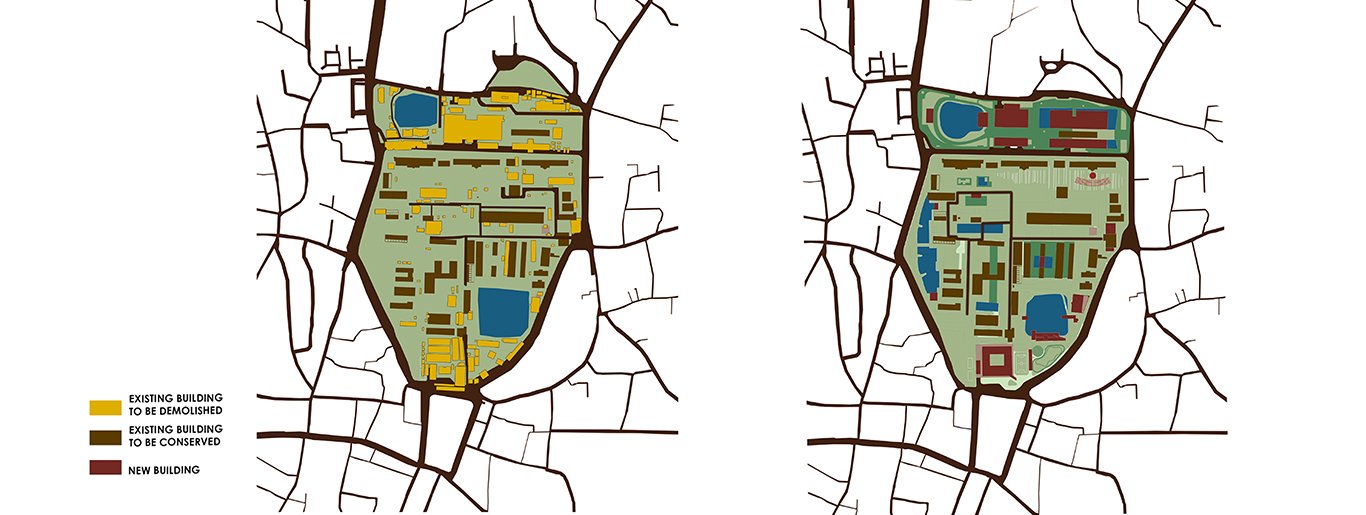
43 of the historic buildings found on site has been kept as is. Through adaptive reuse the old buildings have been given new functions. And the built materials from the old ones that have been demolished have been preserved and reused. Reducing the overall footprint of the site
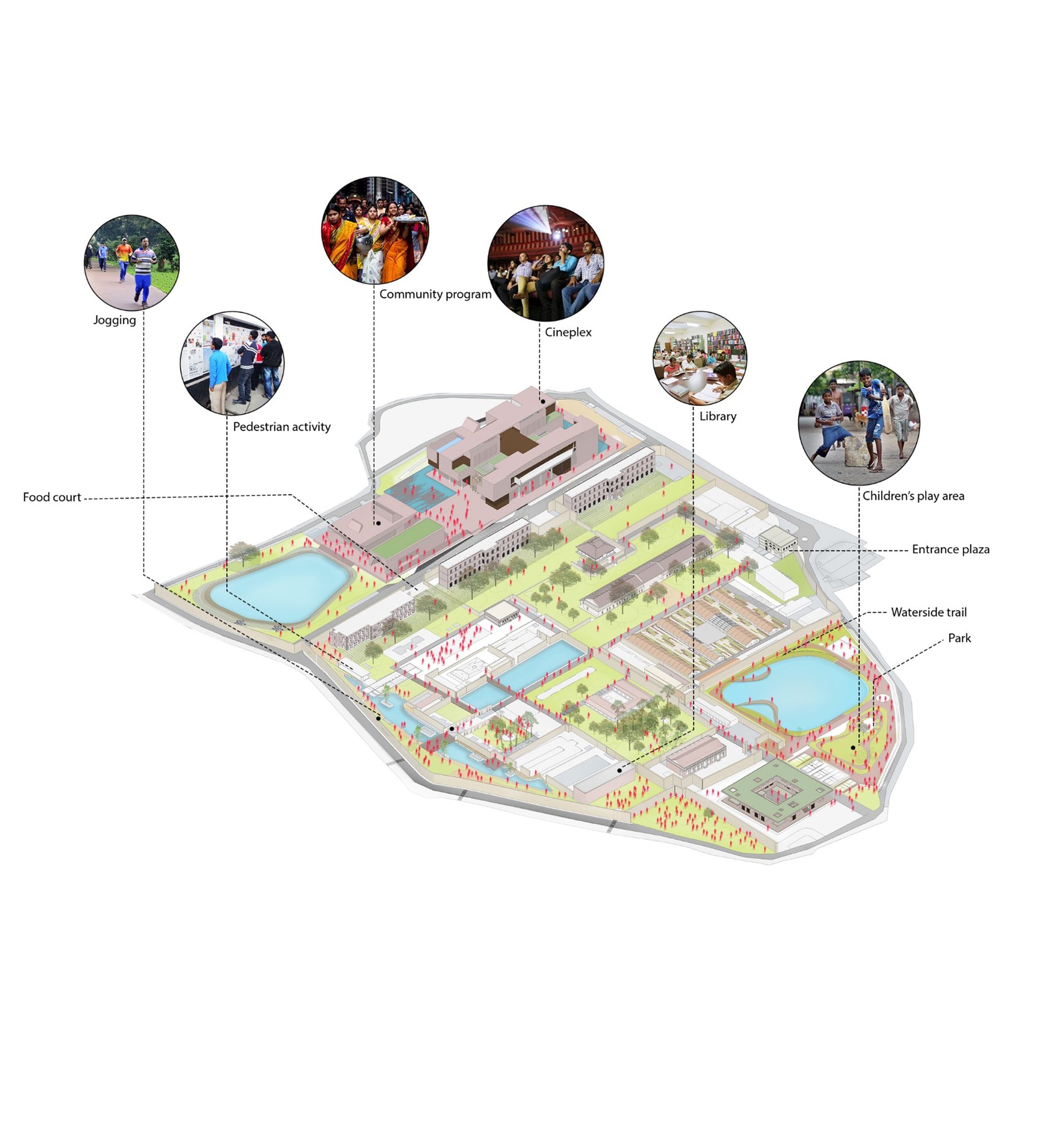
The development will allow for a number of amenities and activity for the visitors. The multipurpose spaces available can be used during festivities, other entertainment facilities like swimming pools and a Cineplex will be a new addition to the area. Traditional food markets bringing up the heritage of the city will attract more visitor. The huge amount of outdoor spaces will allow for different activities like walking tracks for jogging, play areas for children, futsal ground for games
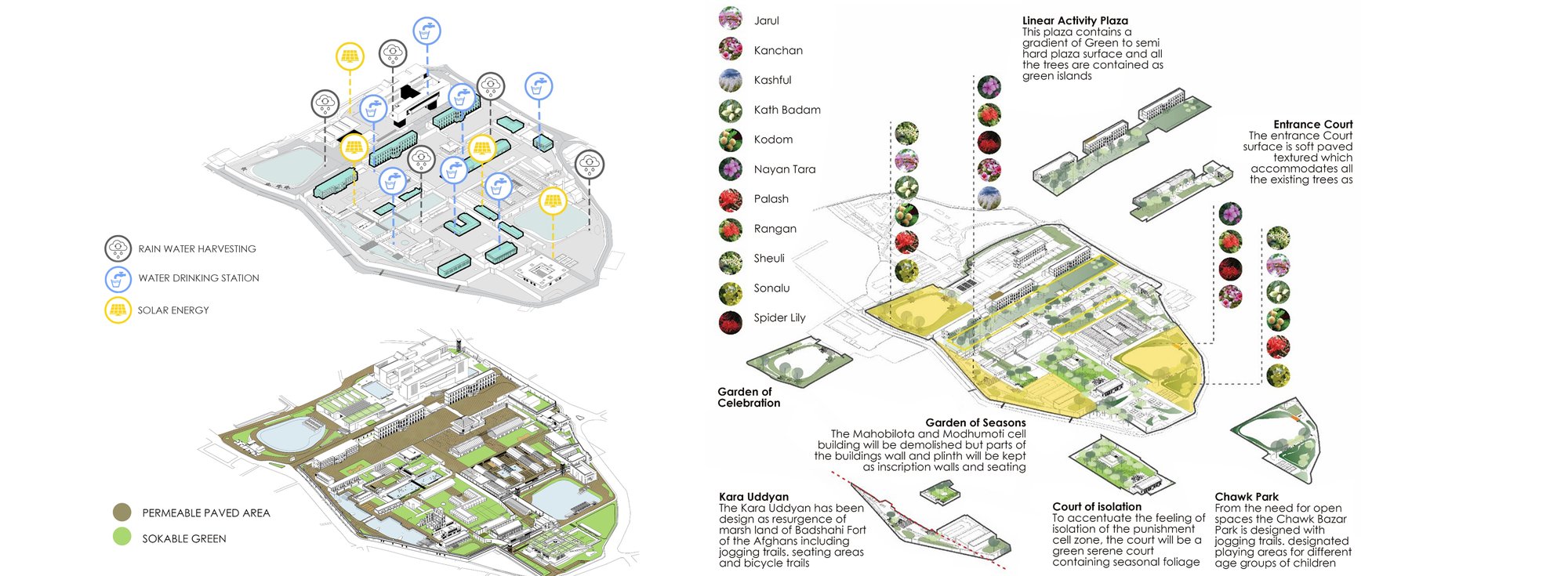
The design offers multifaceted solutions to a number of environmental factors. Steps have been taken to make the design sustainable. Firstly with the introduction of a number of green spaces housing a huge variety of flora which will attract a variety of fauna. All most all of the site has soak able green areas and paved are permeable. A lot of the building materials found on site old bricks from old buildings have been preserved on site as pavement and other features. Since most of the structures are kept as is, it reduces the carbon footprint of the site. Rain water harvesting and power from solar panels are harvested on the site as well.
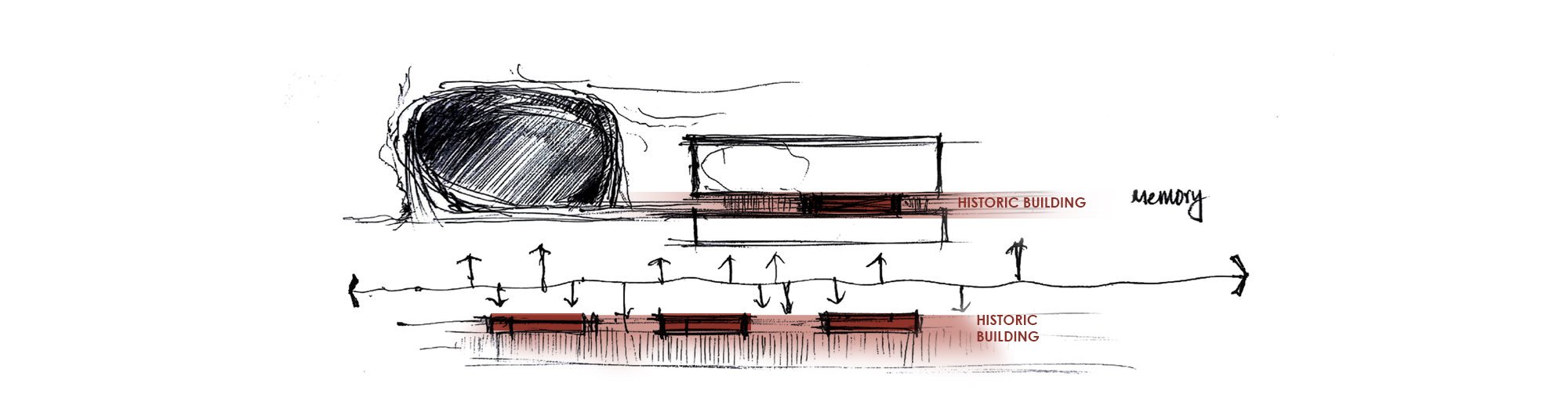
The Old Dhaka Central Jail stands as a timeless witness to the city’s soul — a place where every brick, every wall, carries echoes of memory and history. With each excavation, new layers of time unfold, revealing the architectural and cultural journeys the nation has traversed. The aged structures tells stories of struggle, change, and resilience, reflecting the shifting tides of our socio-political past. Here, the design becomes a dialogue between eras — where the old and the new coexist in harmony. The past is preserved with reverence, while the present gently weaves itself in, never overpowering, only complementing — allowing history to breathe anew