NESCO
MAIN CONTROL CENTER BUILDING,RAJSHAHI
The design of the Northern Electricity Supply Company PLC (NESCO) Main Control Center (MCC) in Rajshahi, Bangladesh is a national competition organized By IAB (Institute of Architects Bangladesh).It is commenced as a fusion in respect to the city's cultural heritage and a vision for a sustainable future.
Site Location : Rajshahi, Bangladesh
Land Area: 2.288 acre
Built Area: 8807 sqm
Client: Northern Electricity Supply Company PLC. (NESCO)
Year Of Competition: 2024
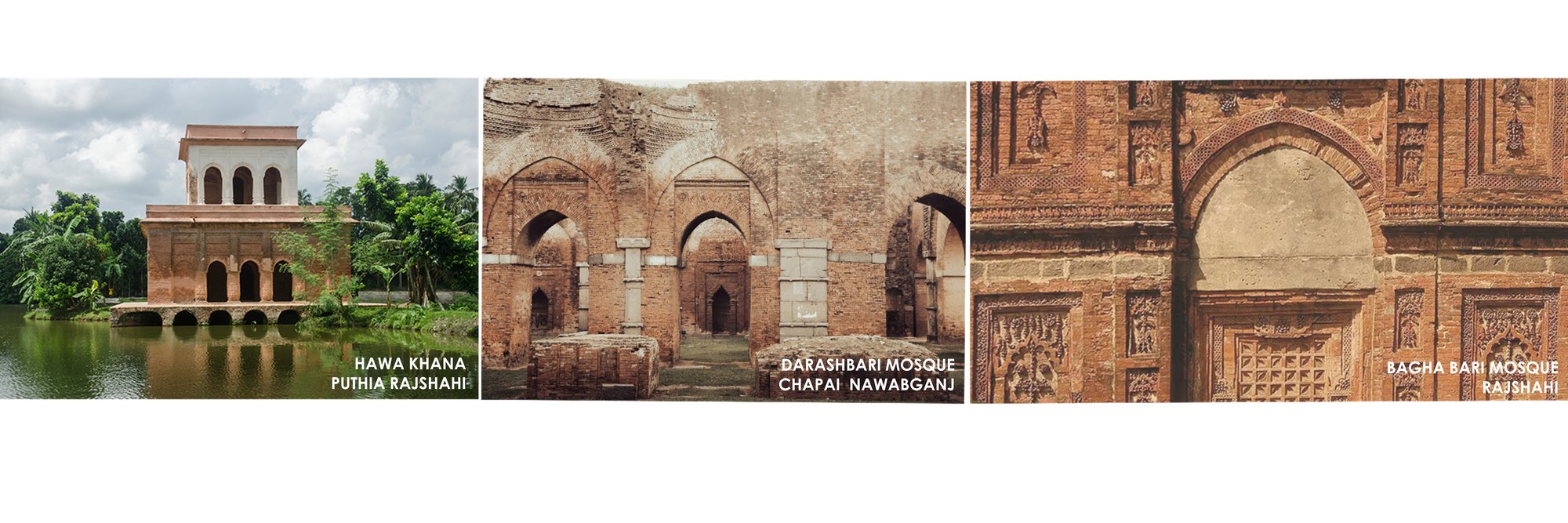
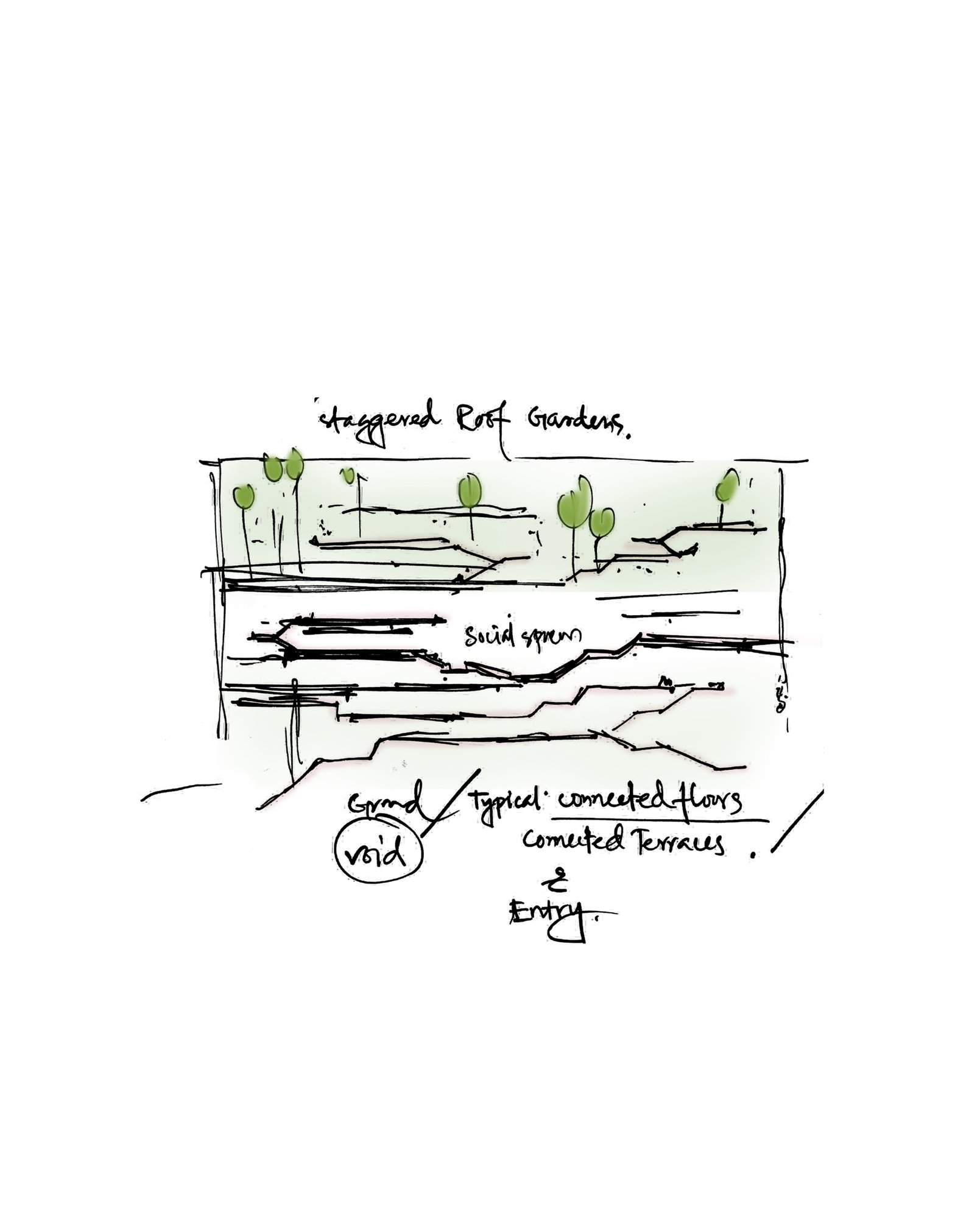
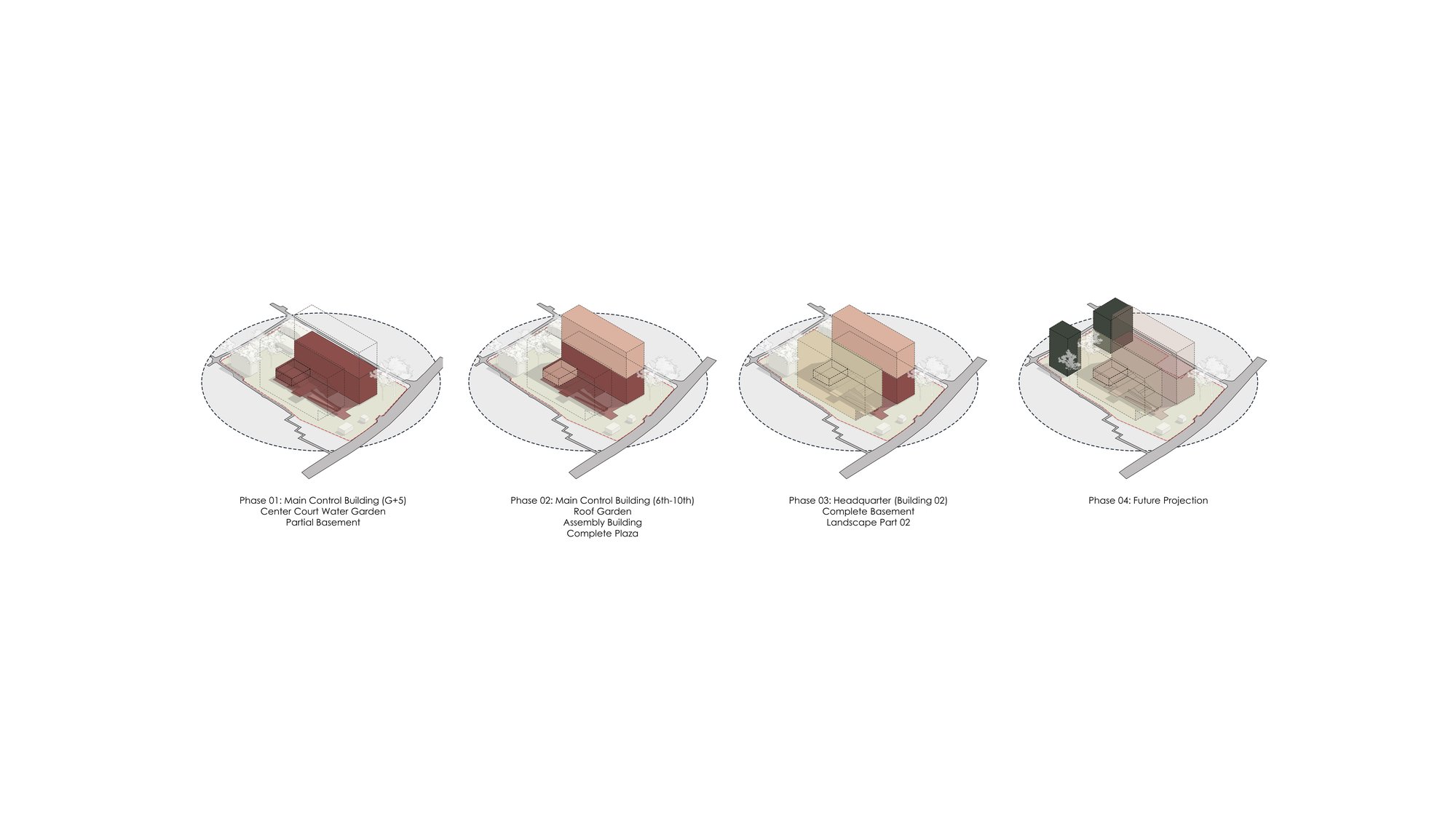
The main inspiration behind the concept of the design is the ‘Hawa Khana’, an old structure reflecting the cultural and structural integrity of its time period, humbly standing centuries later, resembling the architectural brilliance of the complex. Given the dry and heated climatic nature of Rajshahi, the contextual construction methods play a significant role in the perception of the design, the design demanded 3 separate building), Two buildings are proposed, keeping the old buildings and existing green spaces adjacent to them, respecting their need of a personal breathing space. A public plaza, namely a center court, is thoughtfully placed between the two building, breaking the space out and connecting them over multiple levels, creating a stretched platform for the users to enjoy throughout various levels.
The site located in a significant historical Region which is Nestled within the boundaries of a 50-year-old National Geographical Territory, along the northern banks of the Padma River in Western Bangladesh, lies the time-honored city of Rajshahi. Established over three centuries ago in 1700, Rajshahi boasts a rich tapestry of history and culture that has endured the reigns of Rajas, Maharajas, and Zamindars. This ancient city's captivating past has bestowed upon it a wealth of historical and cultural landmarks, beckoning visitors to immerse themselves in its fascinating heritage.
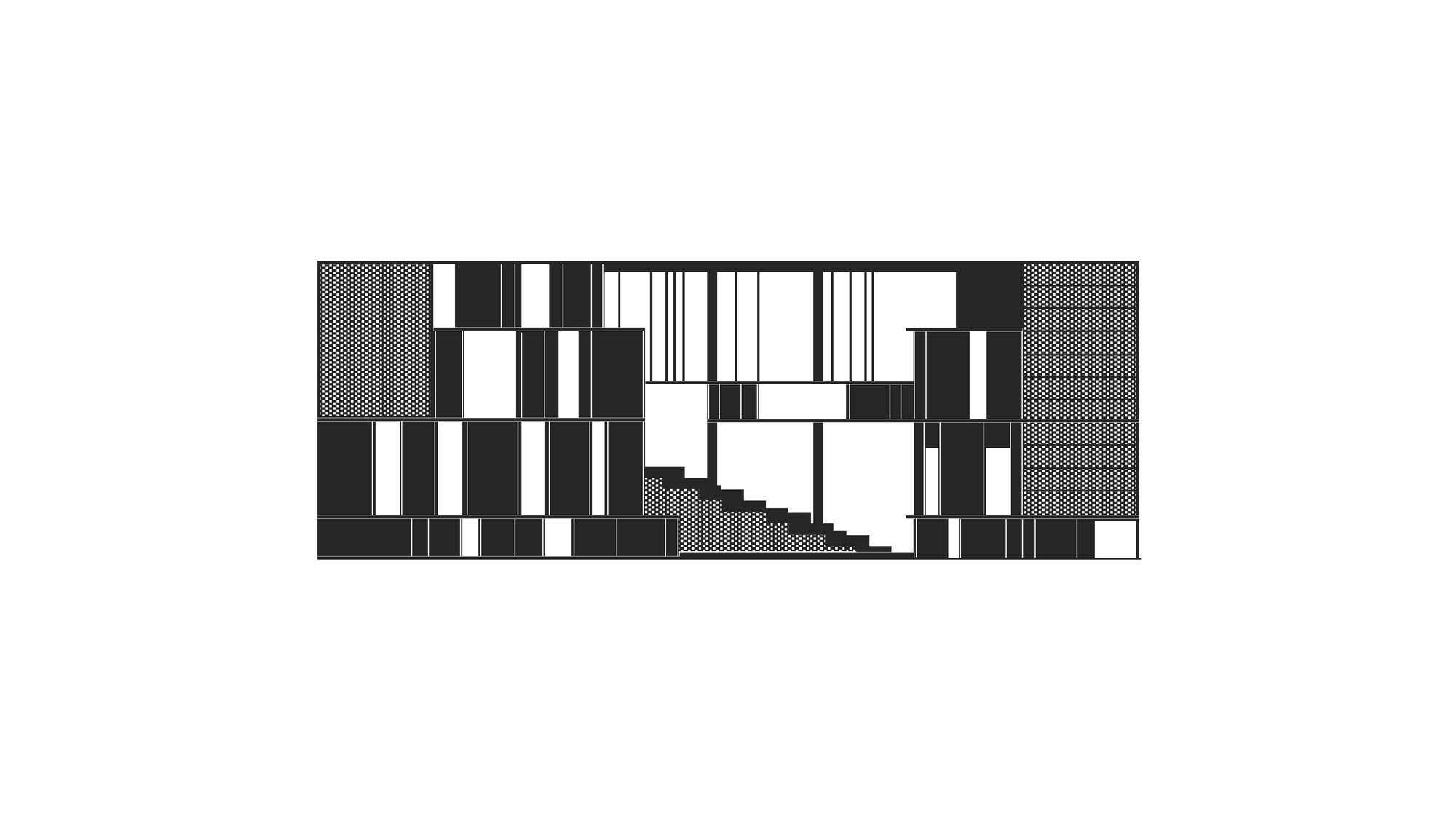
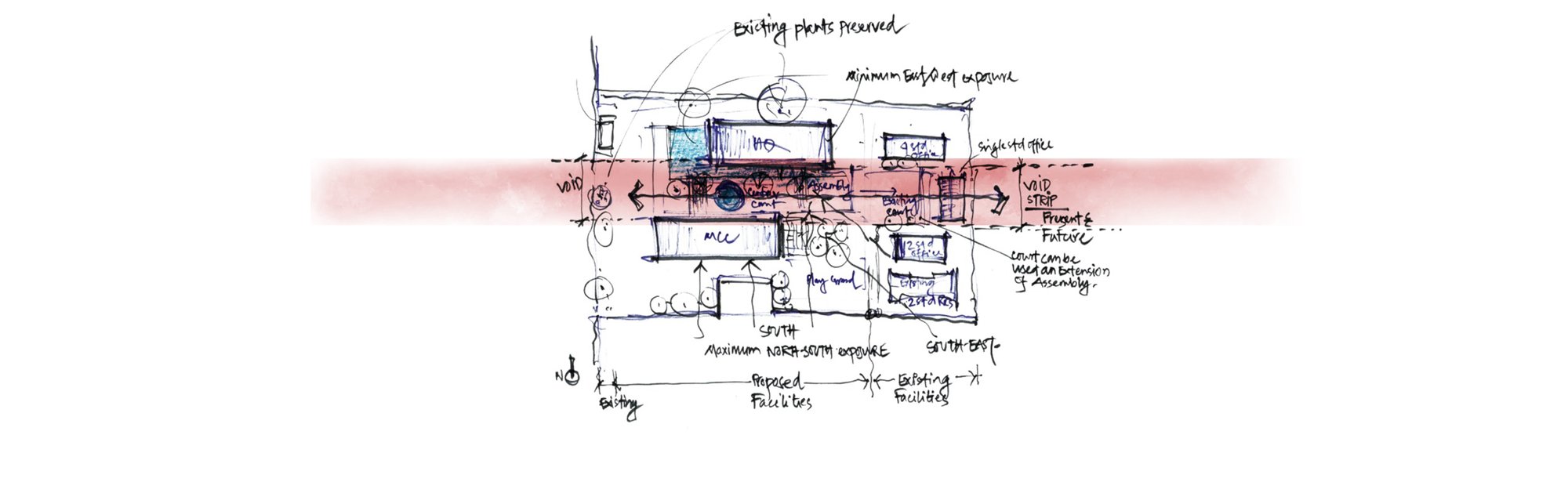
The masterplan is proposed in a way that benefits from the site orientation. Placing the building in north south direction, the majority of the façade gets desired sunlight and natural ventilation where necessary. The width of the building is kept at between 60 to 70 feet ensuring optimal light and air passage through the complex. Desired apertures are placed all over the elevation creating BREAK OUT SPACES for the user, GARDENS AND TERRACES- opting for cross ventilation, ultimately reducing the dependency on mechanical solutions, ELIMANITING LONG TERM COST and harmful emissions to the environment. Thus, the building itself becomes a breathing element. In master plan, the complex works in a way where all units complete each other, by the tying the in-between spaces together.
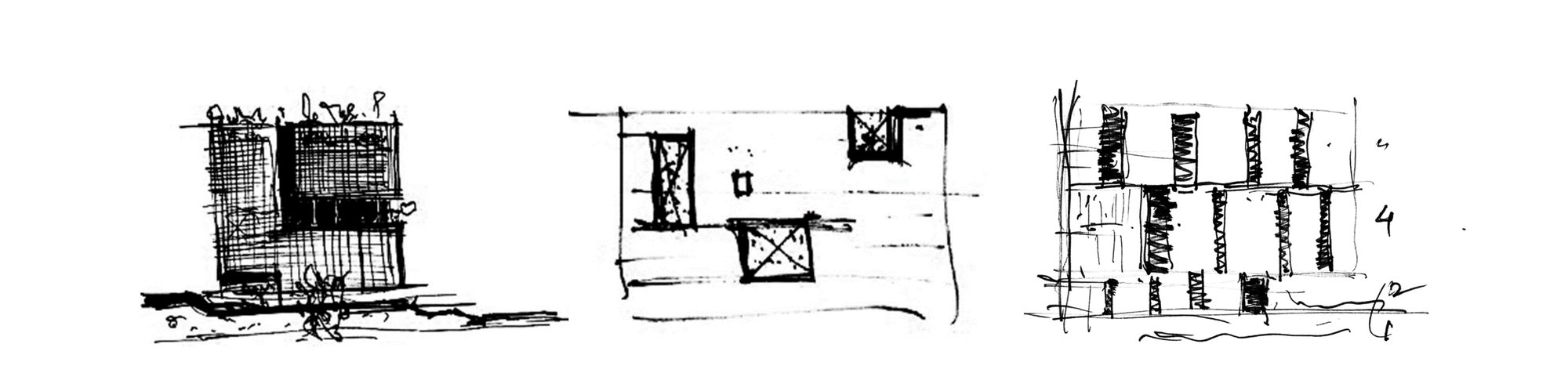
The facade creating break out zones, gardens and terraces for cross ventilation, ultimately reducing the dependency on mechanical solutions and encouraging passive cooling. Instead of a straight brick wall, the folded surface area increases in volume therefore gaining heat slowly and emitting heat faster, automatically cooling itself without any artificial interference. Taking inspiration from ‘Hawa Khana’, and structures from similar climate, the common grammar of the old structures have thick walls and small, densely placed modular opening as windows
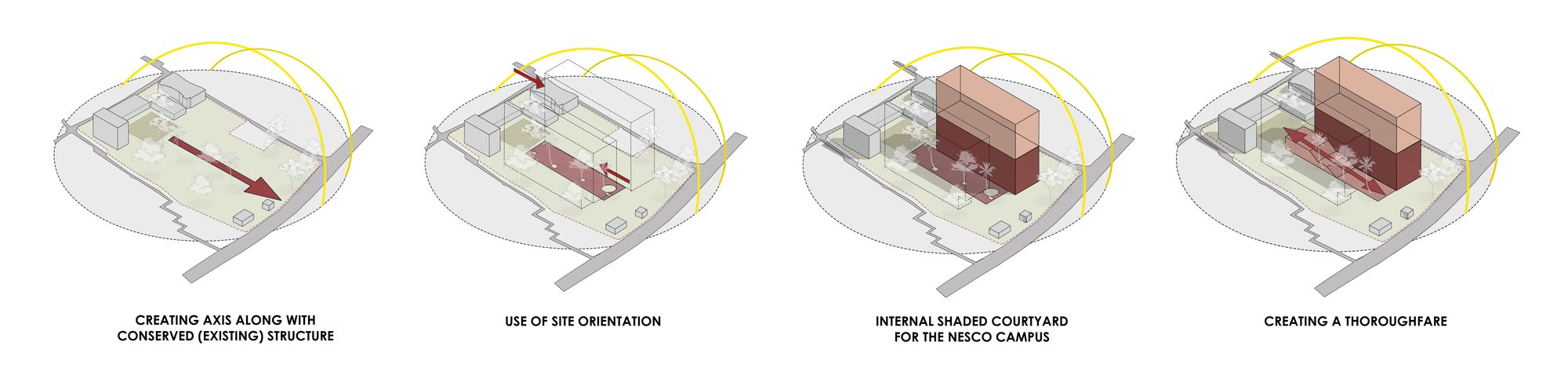
Considering the urban impact of the building, the design commenced from surrendering land from the site for a widened road for the neighborhood, easing adjacent vehicular and pedestrian circulation. 6 existing building are to be preserved by NESCO, one of which is already being demolished as seen during a site visit and thus respecting their vision the design began. The local climate and rich culture play the key role in determining building orientation, form arrangement and fenestration material and properties. Emphasizing the role of passive design ideology, fundamental decisions were made.
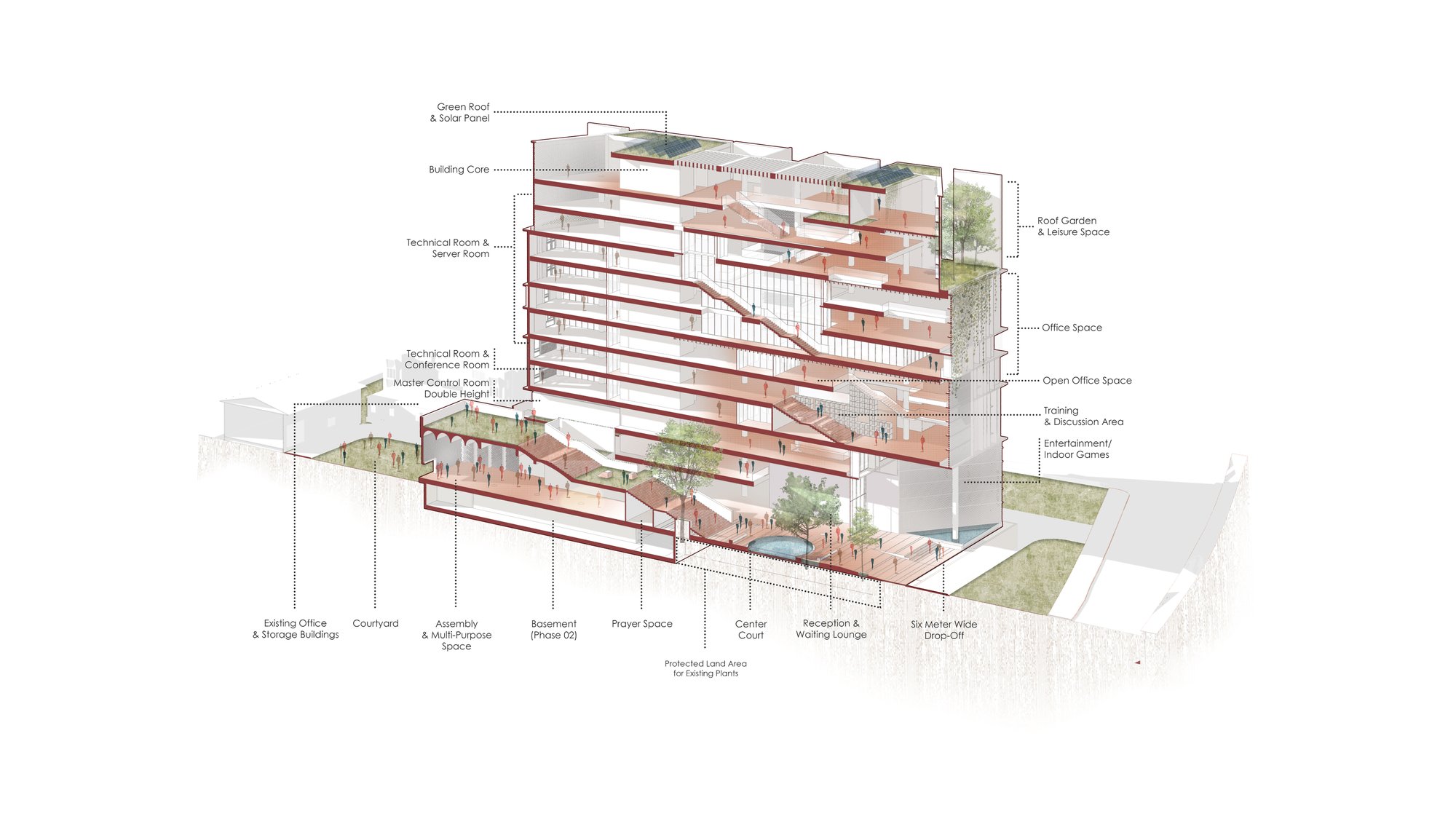
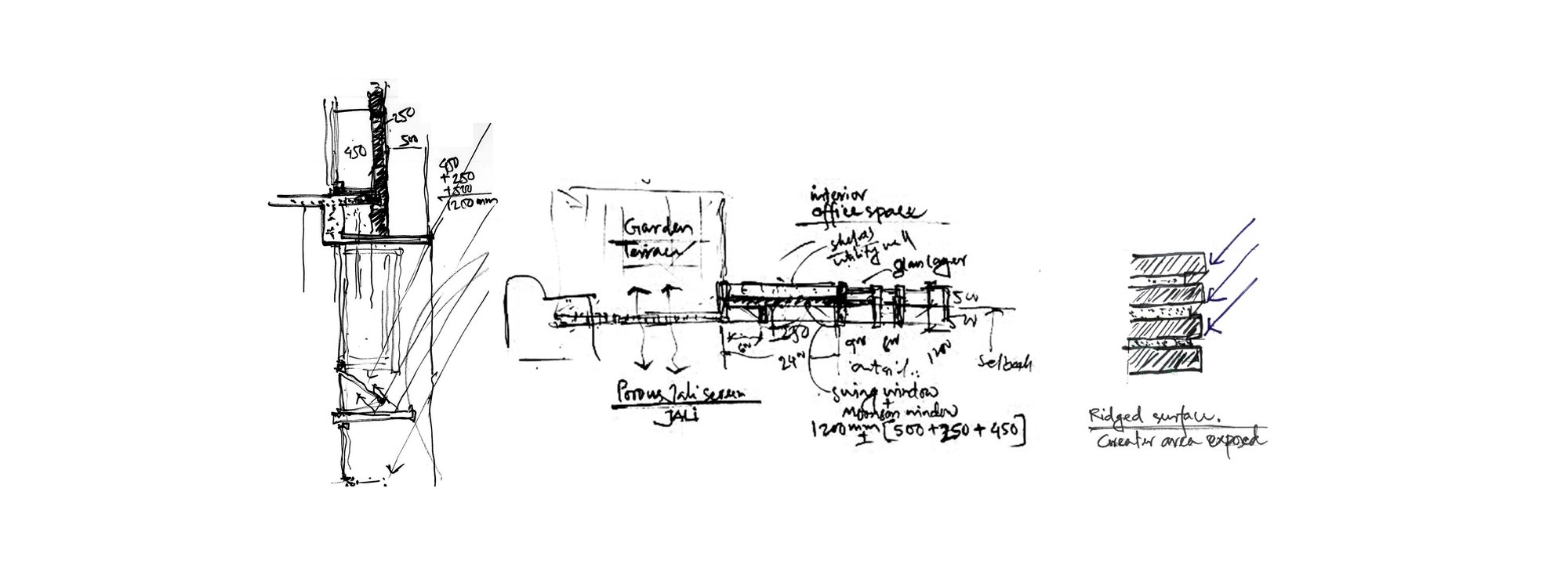
The walls become the protective layer from the heat and the small openings create a funnel effect, enabling hot air to cool and pass through. Taking this concept, a hybrid solution is thought off – a performative wall is designed, that has vertical fins with small modular windows. All openings are manually operable swing windows composed with rain windows that let the breeze in and not the splash, therefore the space is brought down to human scale, responding to the users need. The glasses are placed inside the fin, cutting out surface heat. The inner spaces of the performative wall become cabinet spaces for the office.

The intention of the design was to create a dialogue between the users of the complex. The HQ commences its journey through a connected thorough fare for the public, that is extended inside the building, continuing the progression. The MCC placed mirroring the progression, engaging in a dialogue between the two buildings. An interlocked open campus is created between the buildings for the public, encapsulated between the forms. The complex itself resembles both cultural and architectural diversity by respecting the regional crafts into the design