EDISON DESDEMONA
PREMIUM CONDOS
AT BASHUNDHARA RESIDENTIAL AREA
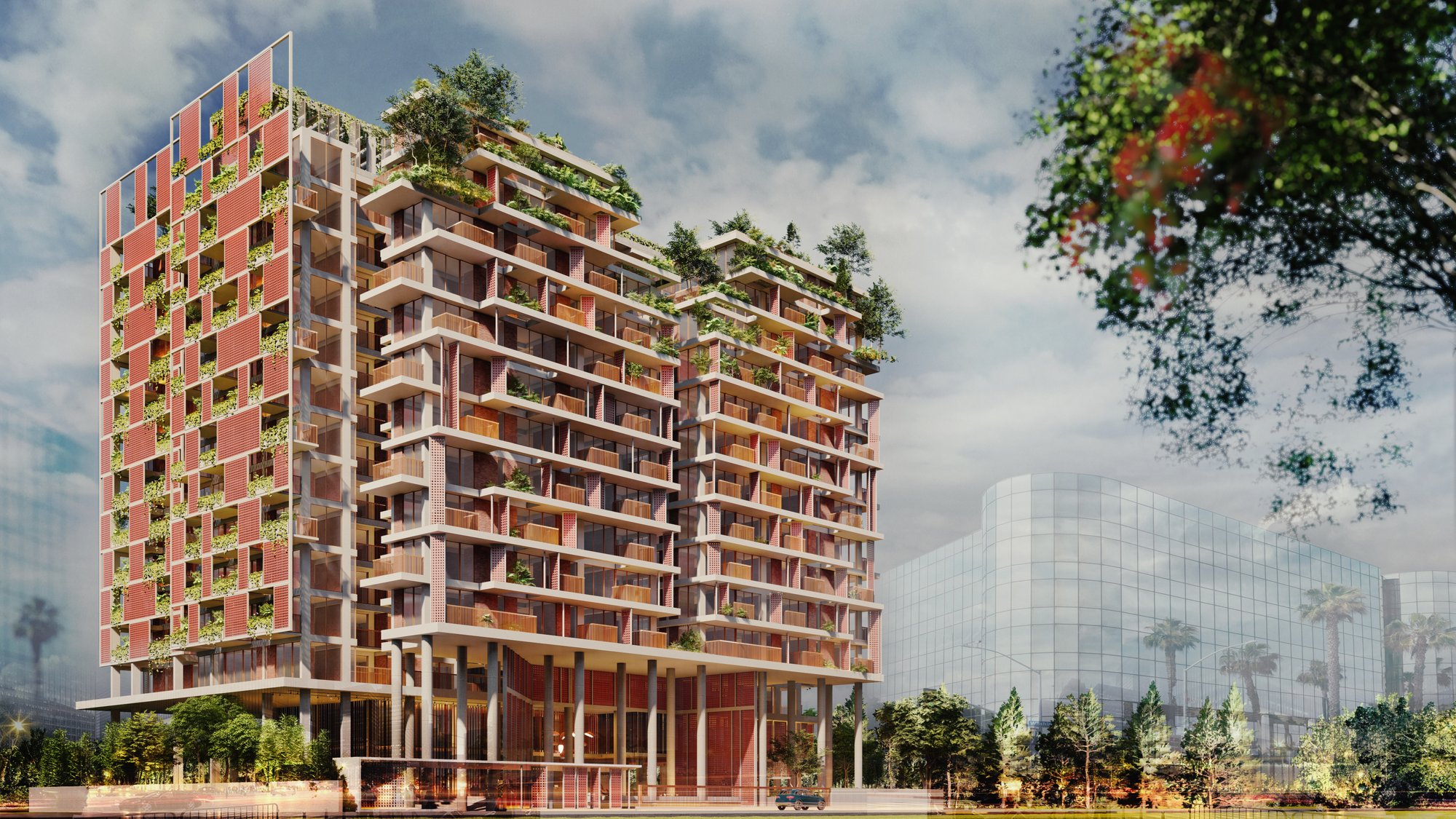
This is a closed competition winning project among three architectural consultancy firm arranged by Edison real Estate Ltd. Project named ‘Edison Desdemona’ is a multi-storeyed residential building that reinterprets contemporary urban living by integrating natural elements and social context.
Site Location : Japan Street, Bashundhara R/A
Land Area : 40 Katha / 5057sqm
Build Area : 23,800 sqm
Client : Edison Real Estate Ltd.
Structural Consultant : CIVIC Solution.
MEP Consultant : SM Engineering Solution.
Project Status : On Going
“MAKING A HOME”
Re-creating memories
Dhaka is slowly turning into a shimmering mosaic of glass and light — a city chasing reflections rather than relationships with its surroundings. Towers rise higher each day, their mirrored skins gleaming under the sun, while questions of climate, comfort, and context fade quietly into the background. In the pursuit of grandeur, the rhythm of breeze, the play of shadow, and the intimacy of rain have become almost forgotten luxuries.
Desdemona stands as a gentle rebellion against this growing disconnect. It reimagines living not as an escape from nature, but as a dialogue with it. Here, walls breathe, courtyards collect the rain, and spaces unfold to embrace light and air in their most honest forms. The design refuses to be confined by the vertical monotony of urban apartments—it invites inhabitants to experience the poetry of daily life shaped by Dhaka’s true climate and culture.
In a city of sealed glass towers, Desdemona seeks to reopen the windows—to let the city feel the wind again.
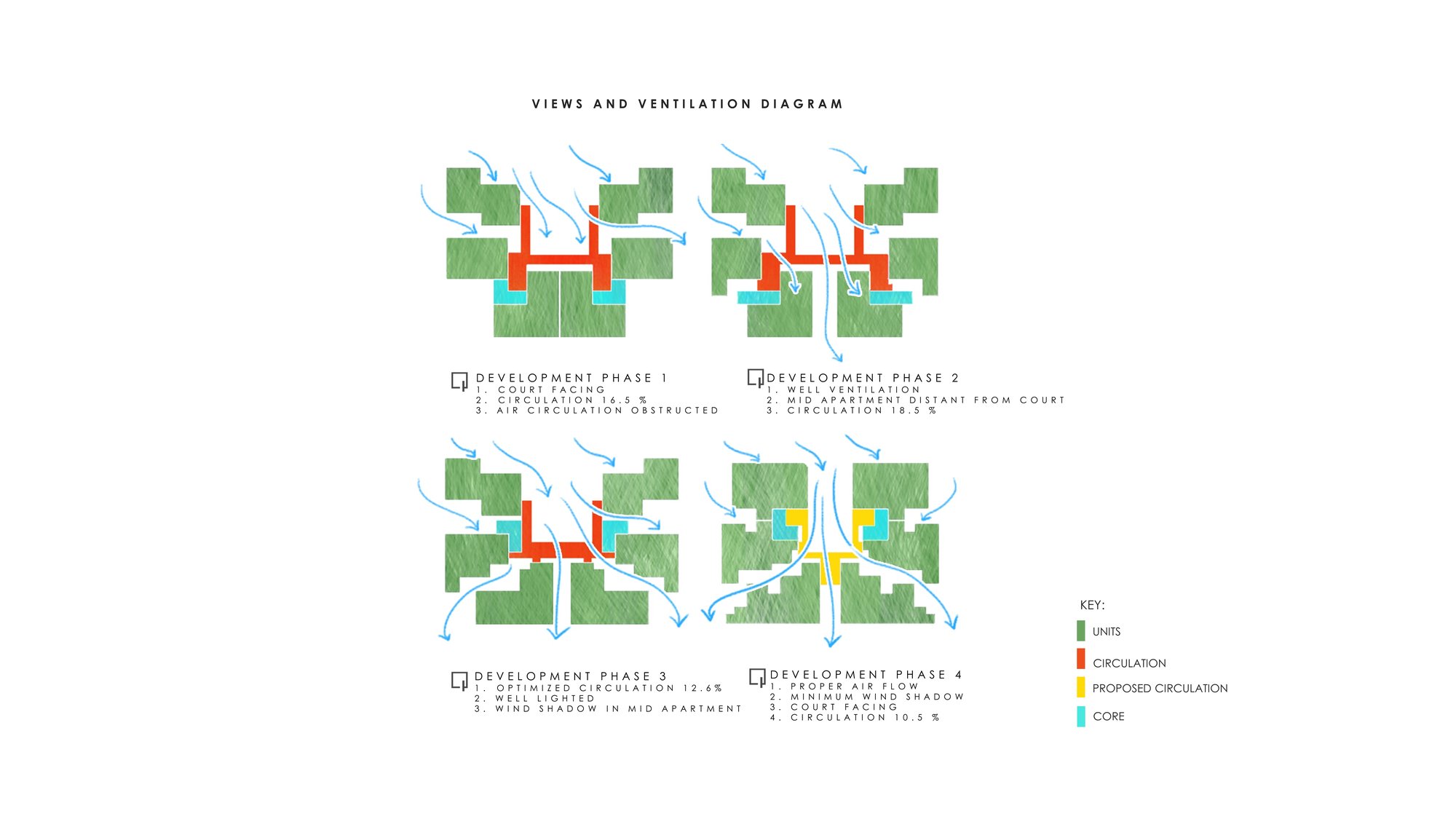
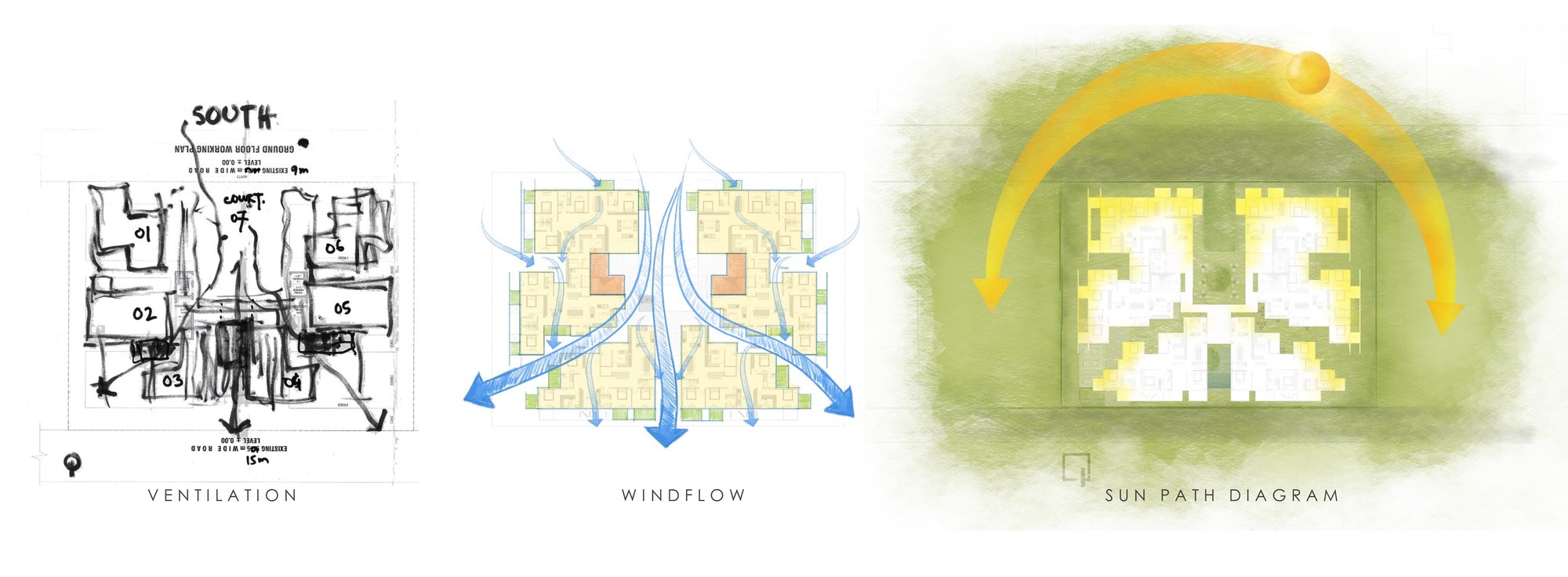
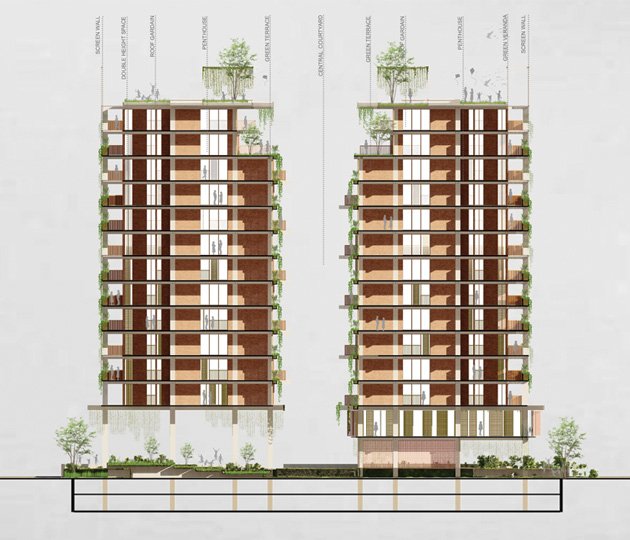
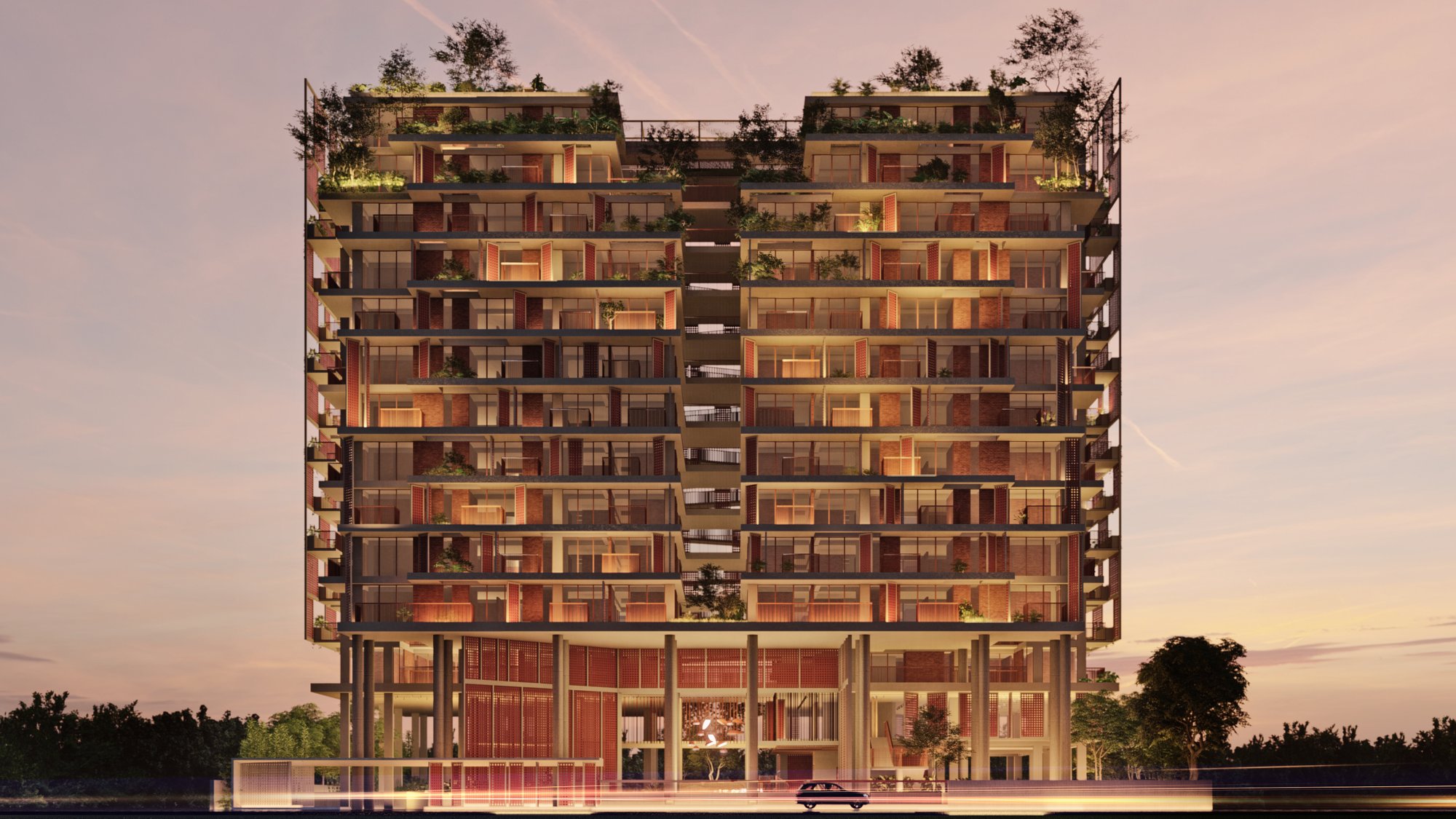
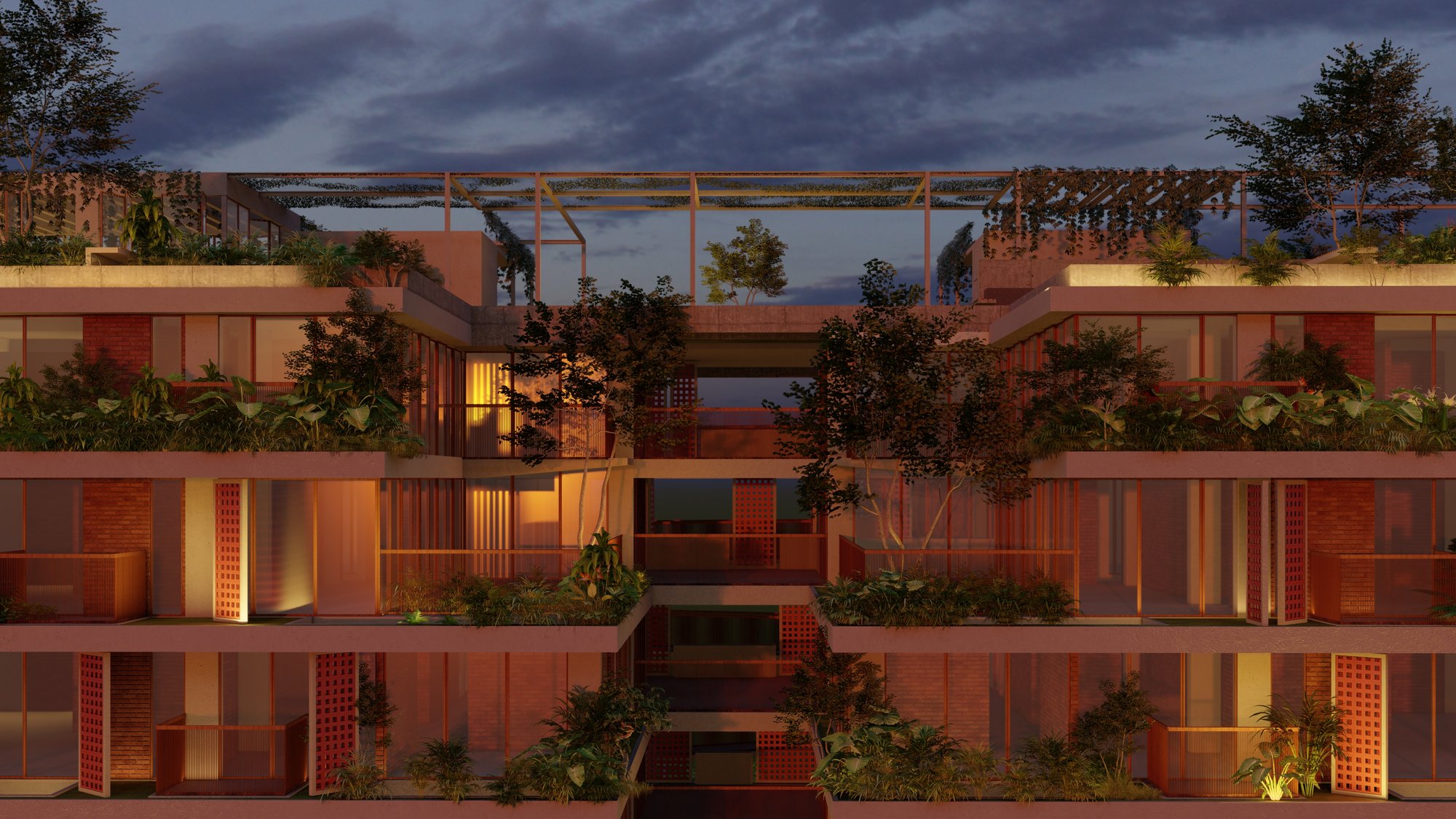
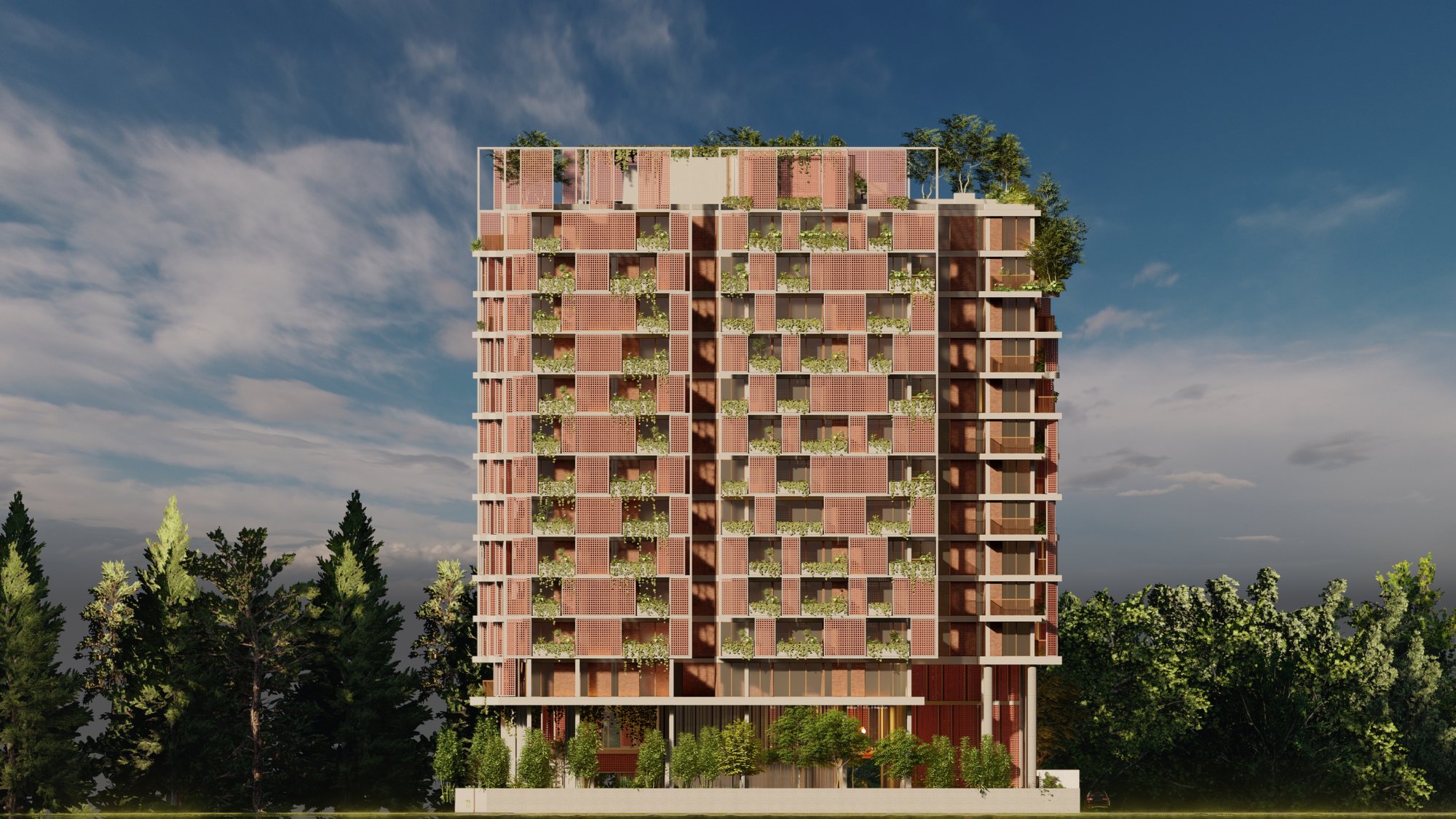
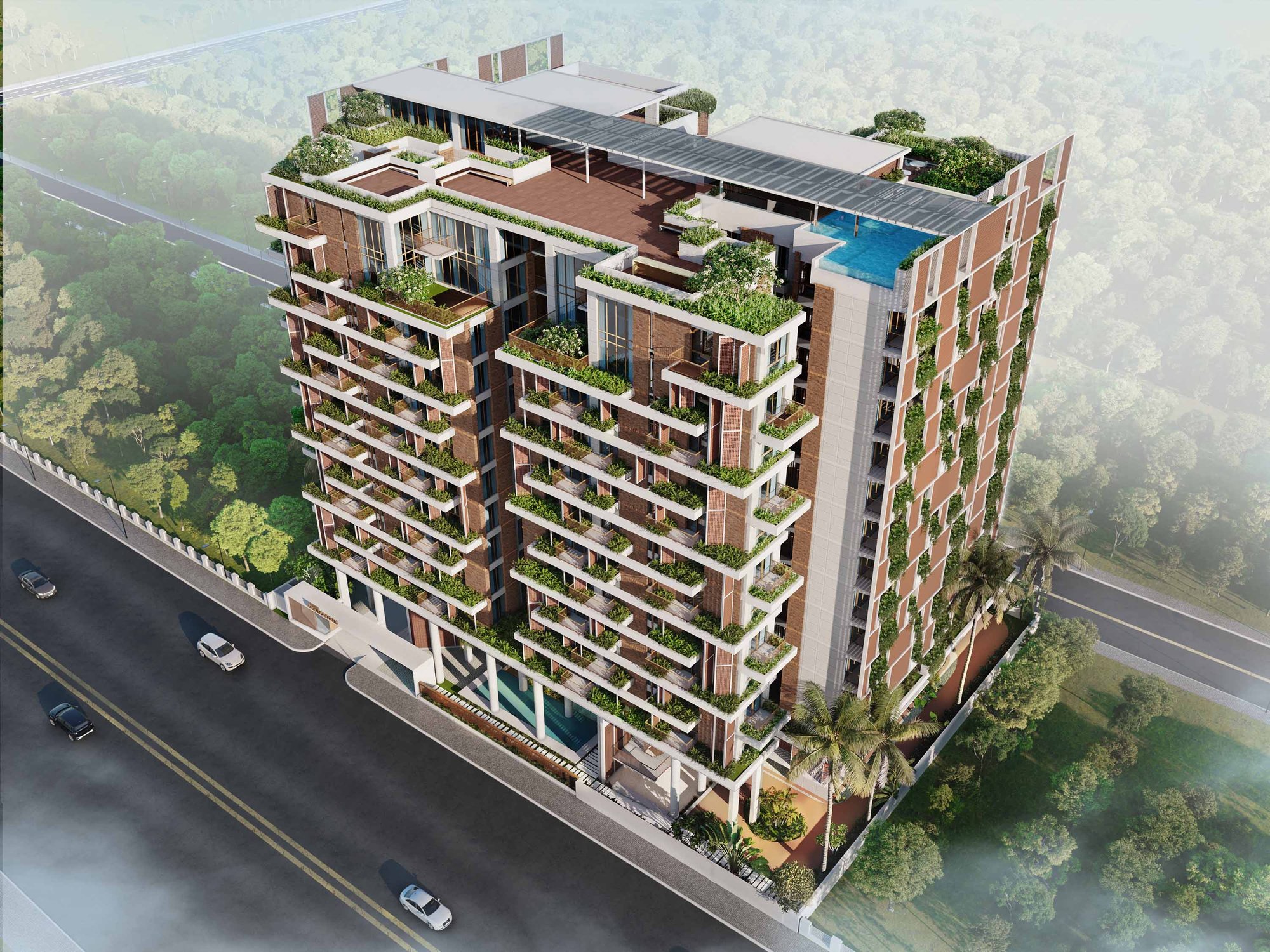
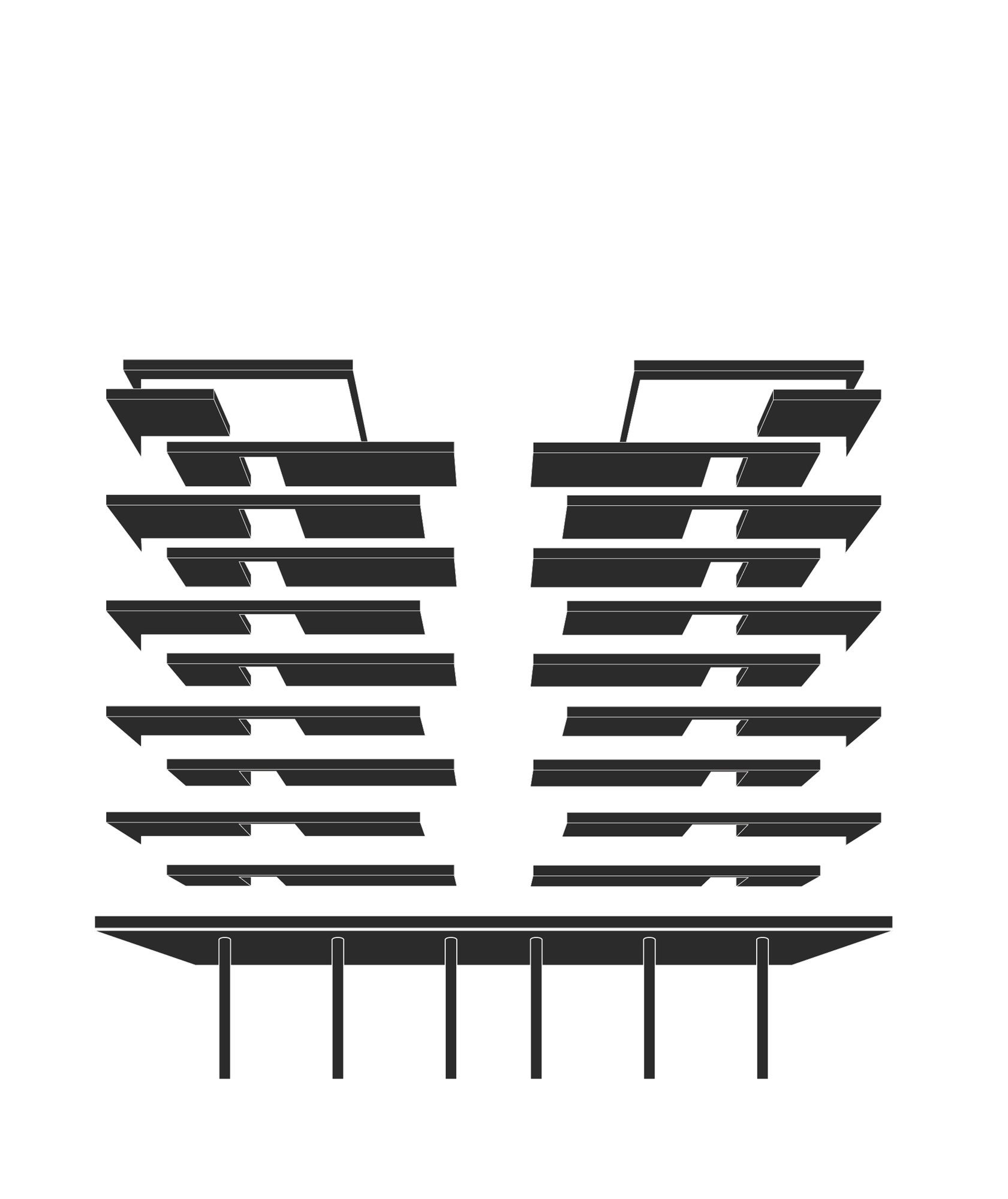
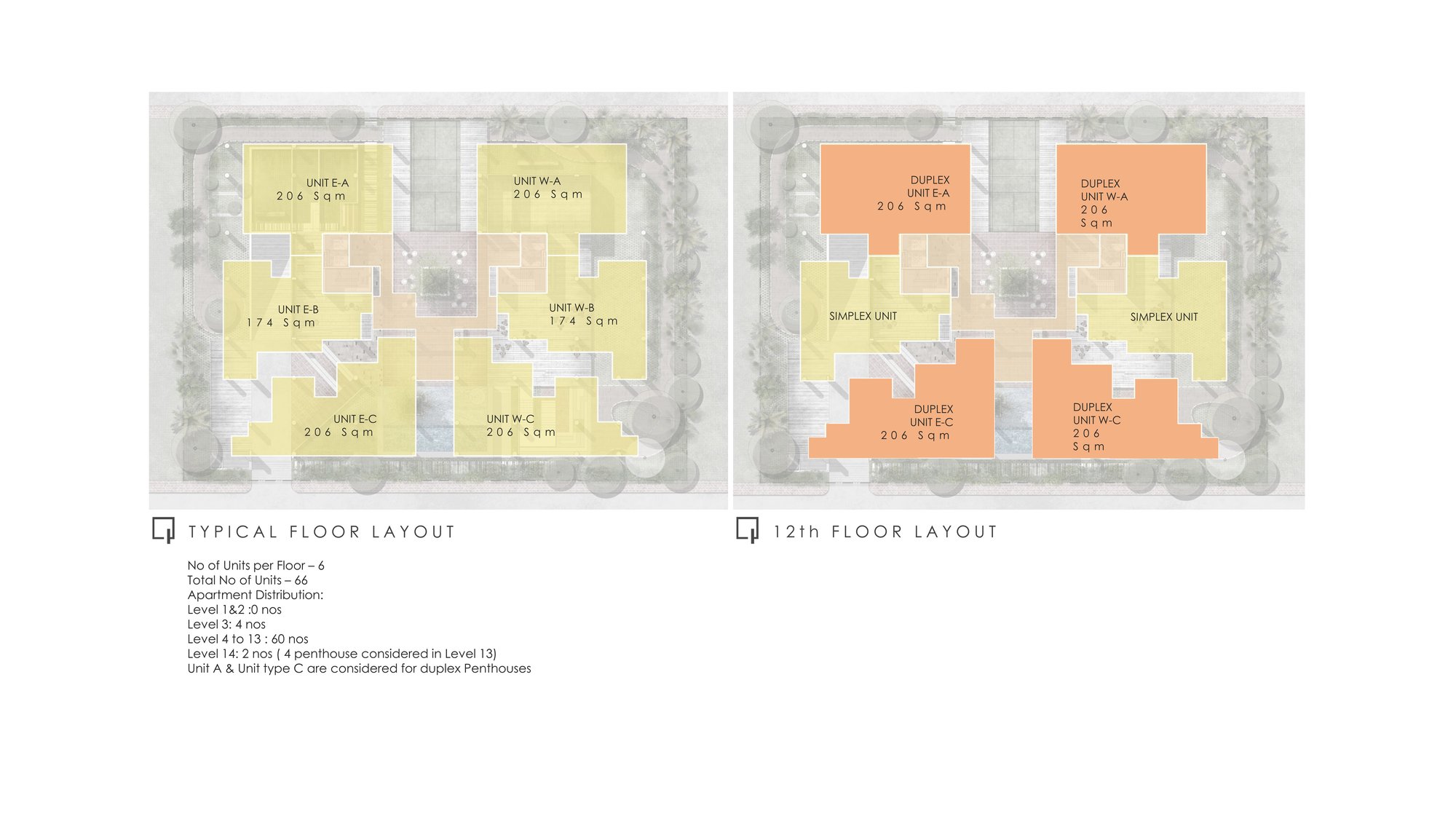
Residential units are arranged in alternating positions to create a dynamic building form that enhances both spatial quality and environmental performance. This strategic staggering allows every unit to receive ample natural light, uninterrupted cross-ventilation, and open views from multiple directions. The configuration not only maximizes comfort and energy efficiency but also fosters a visual and physical connection between interior spaces and the surrounding environment, reflecting the project’s intent to harmonize urban living with nature.
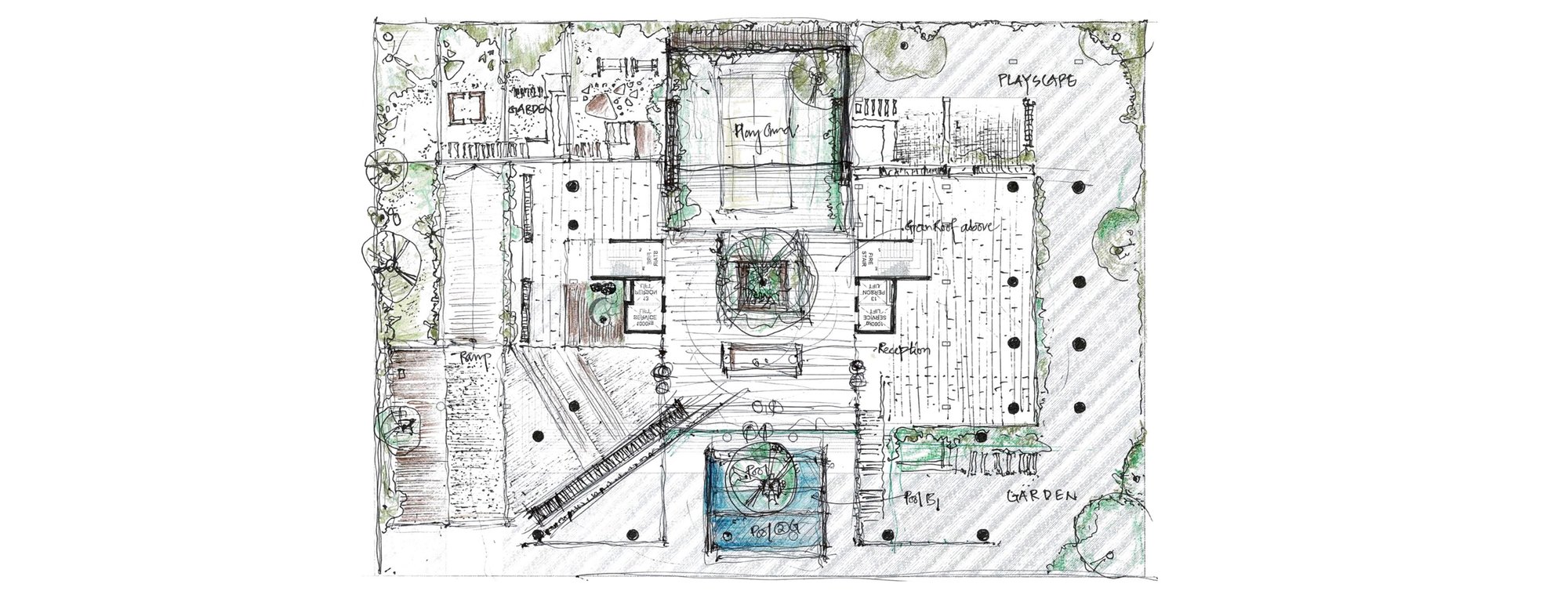
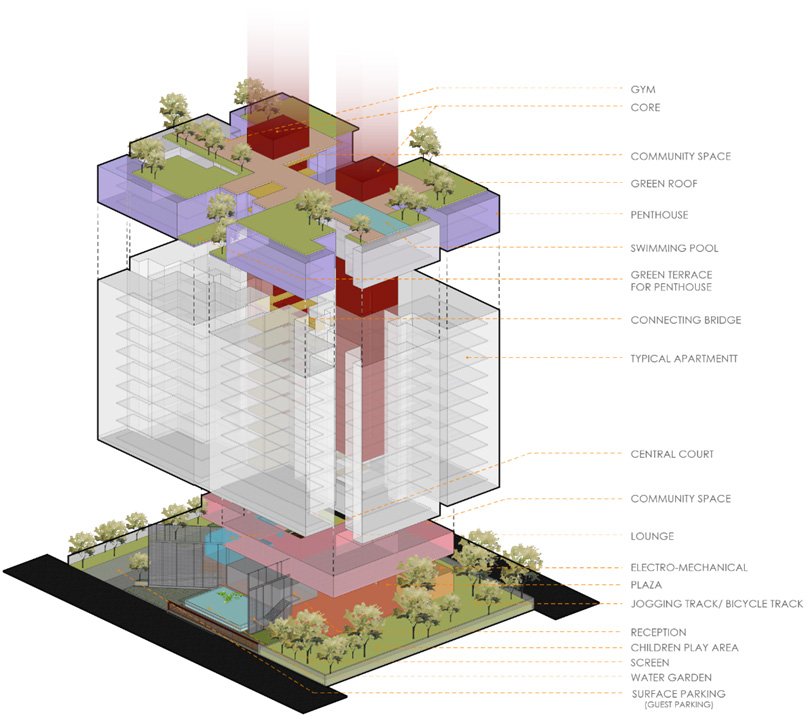
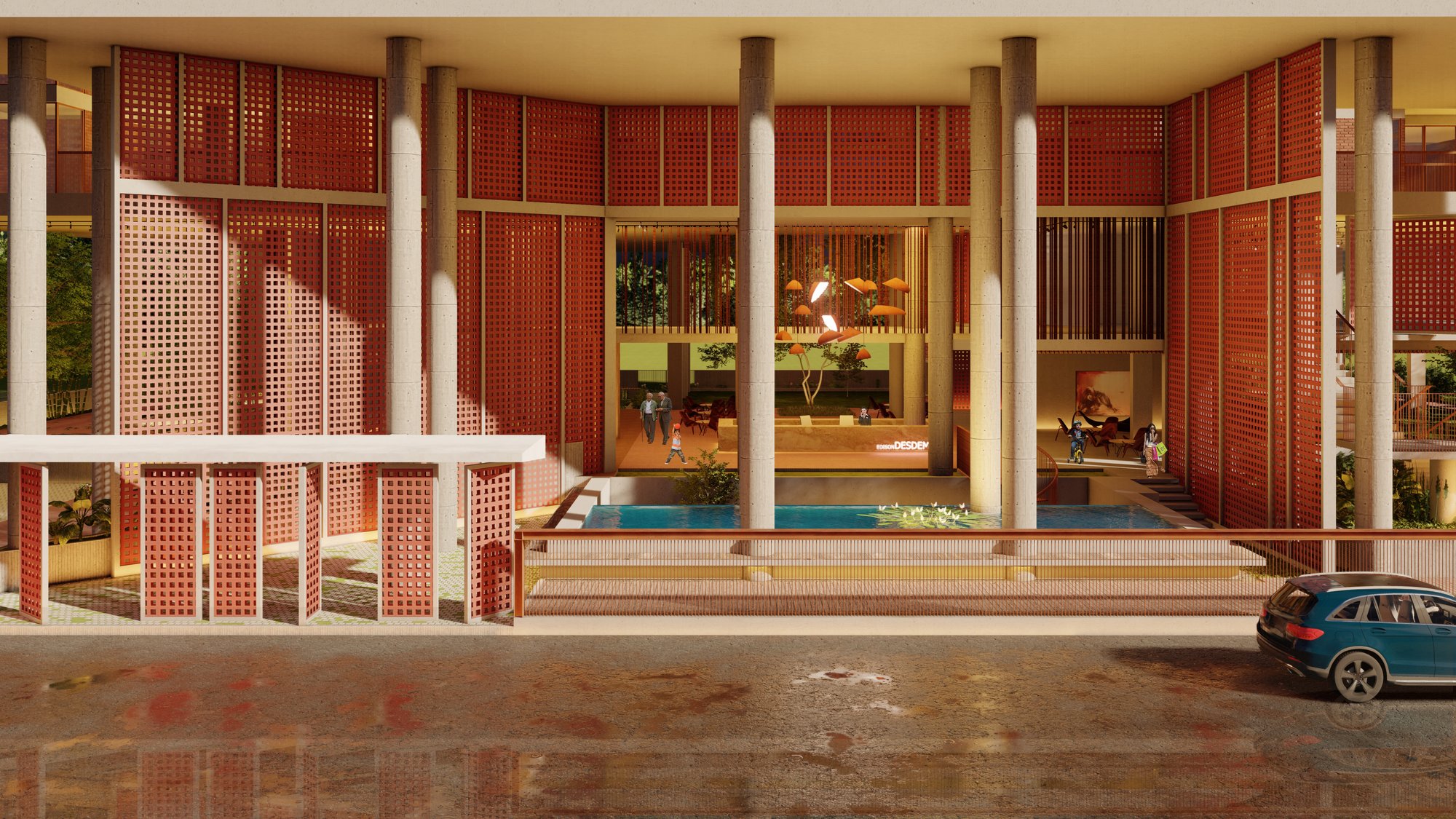
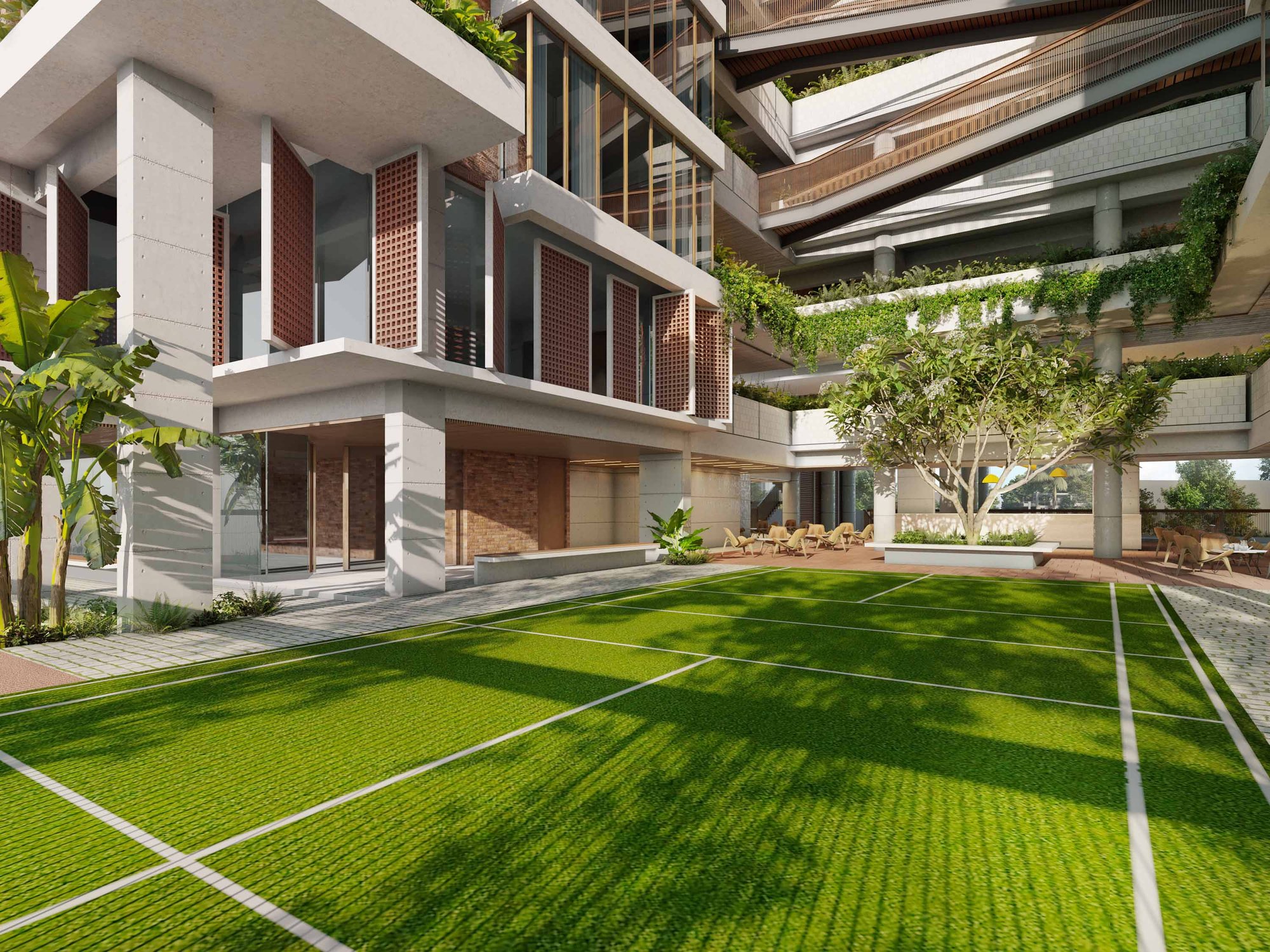
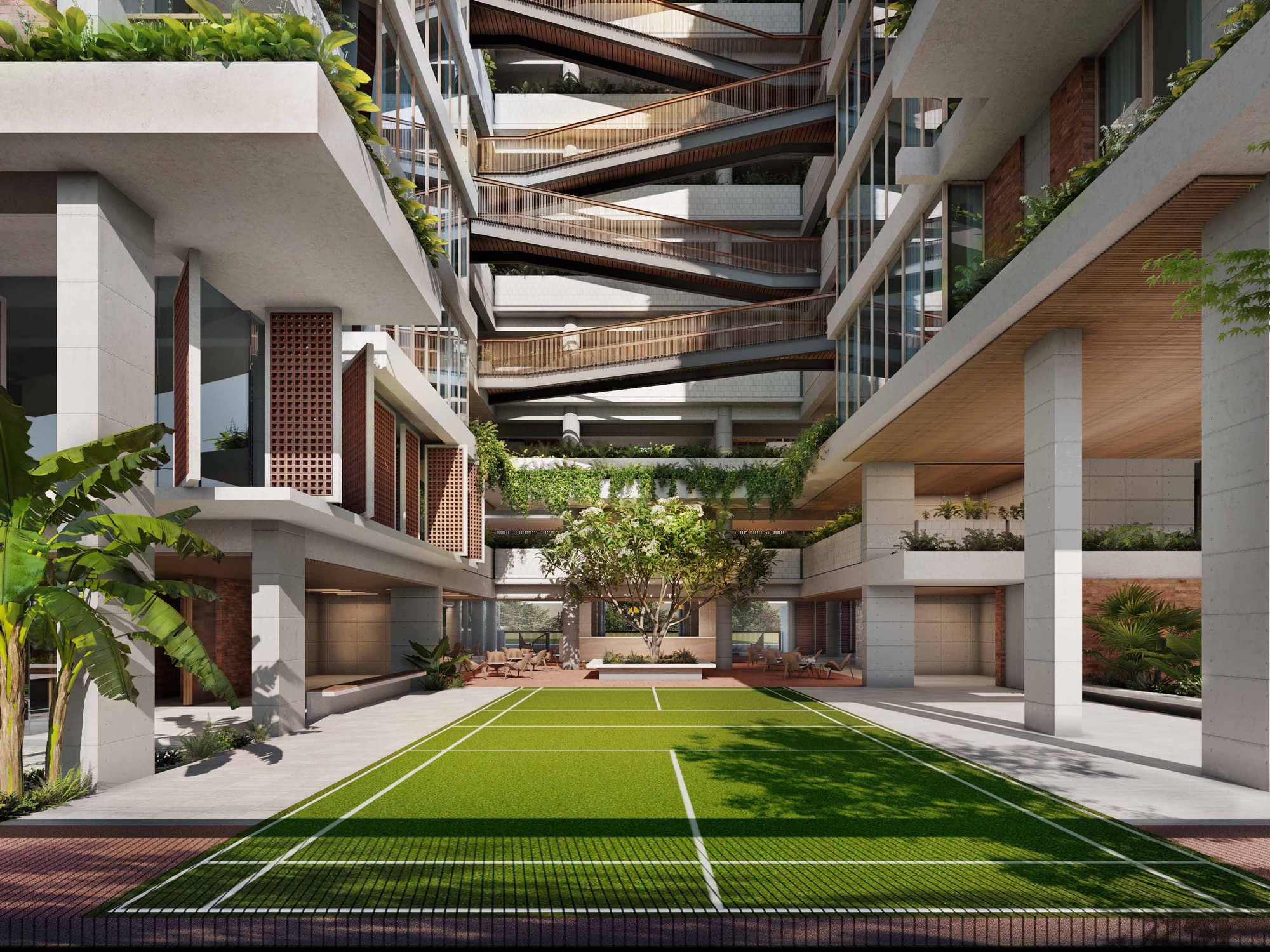
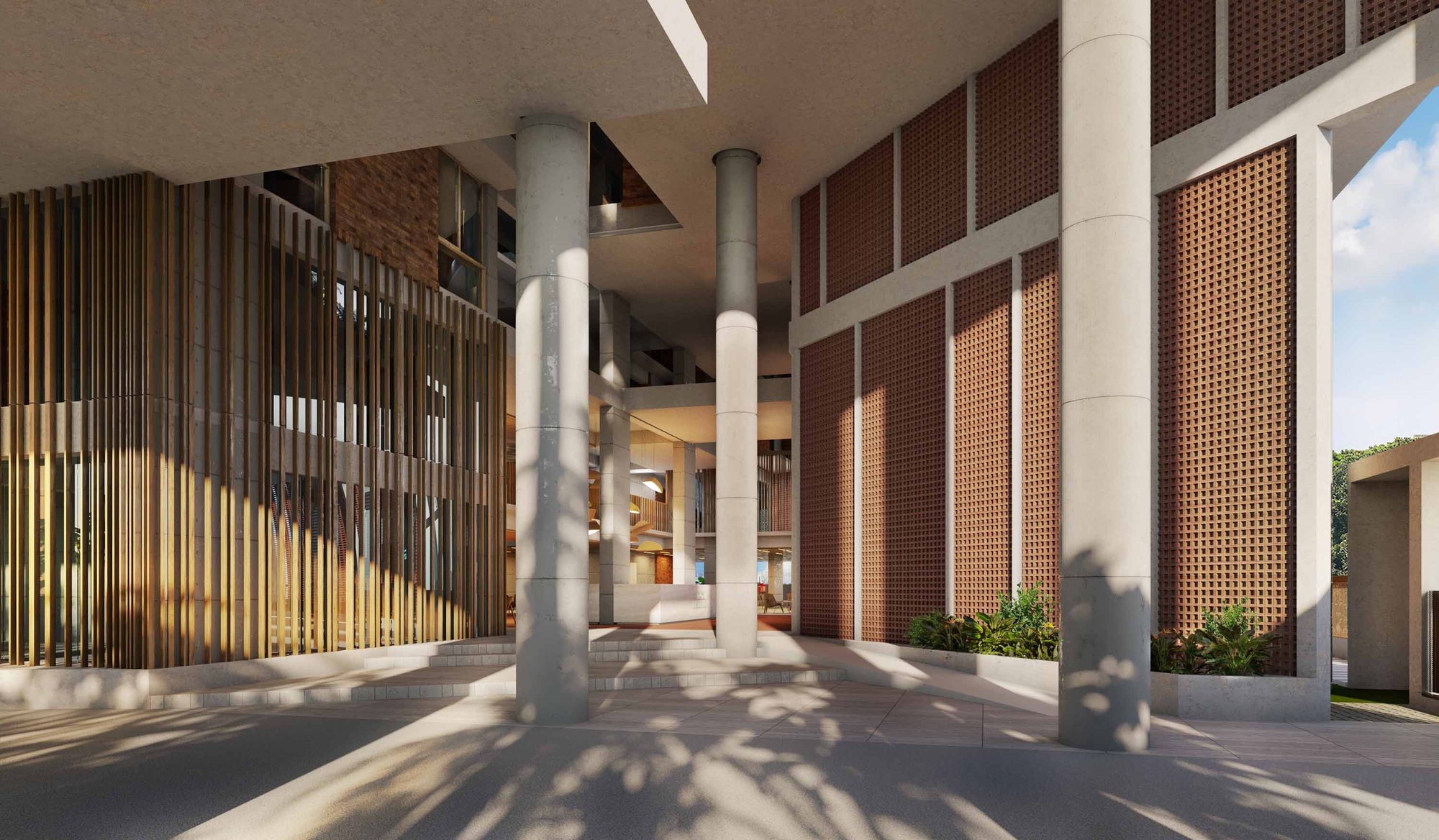
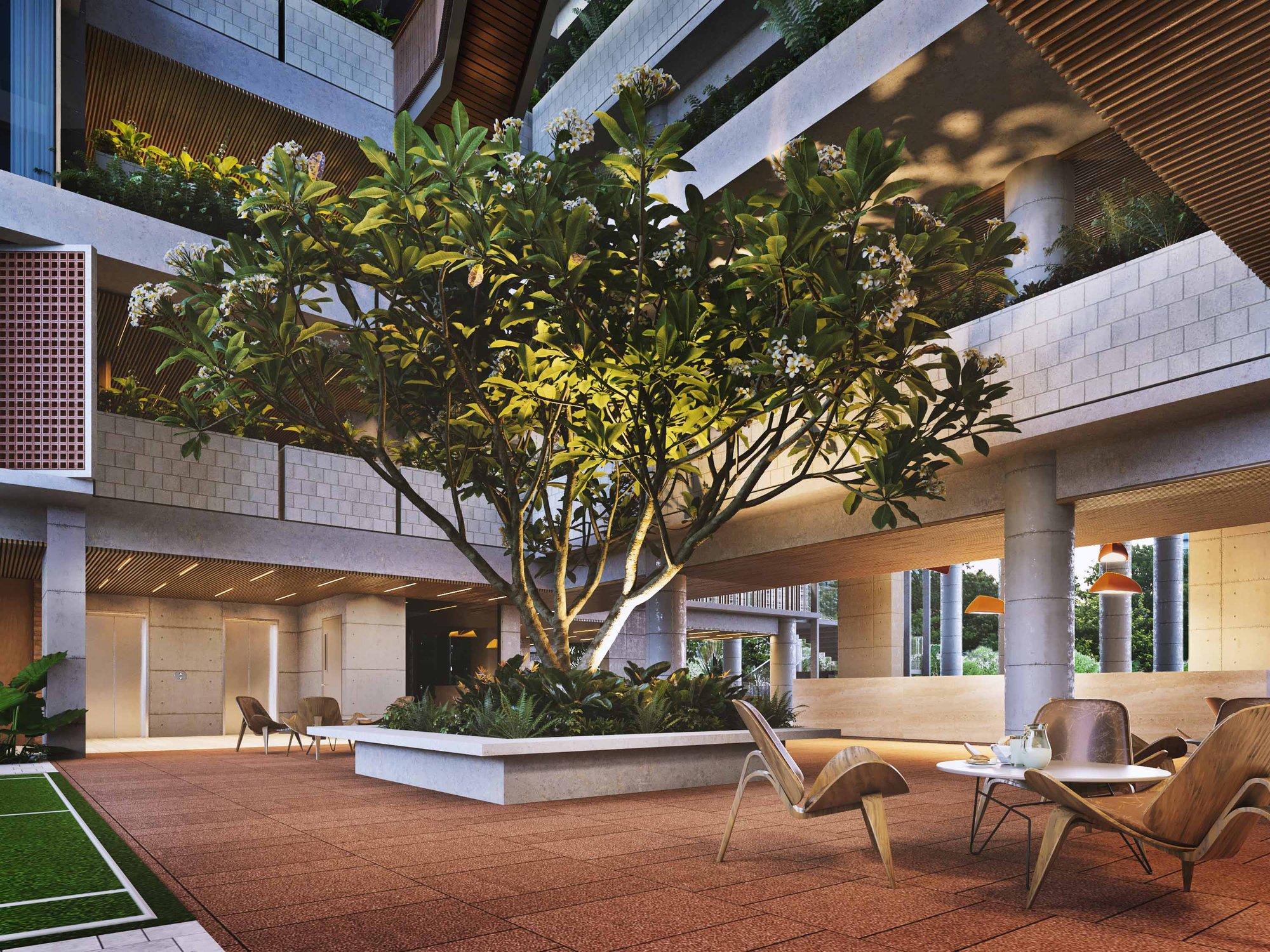
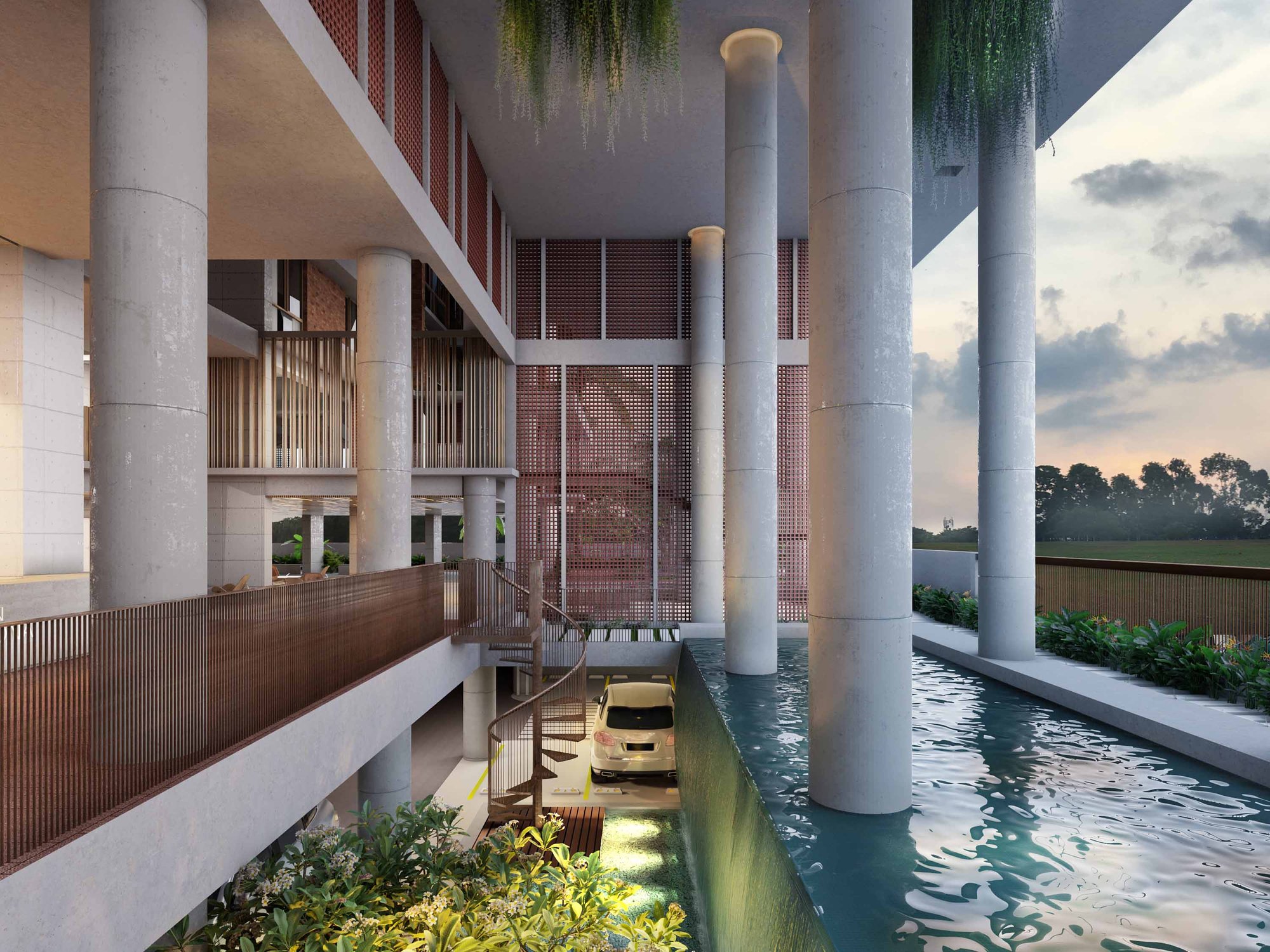
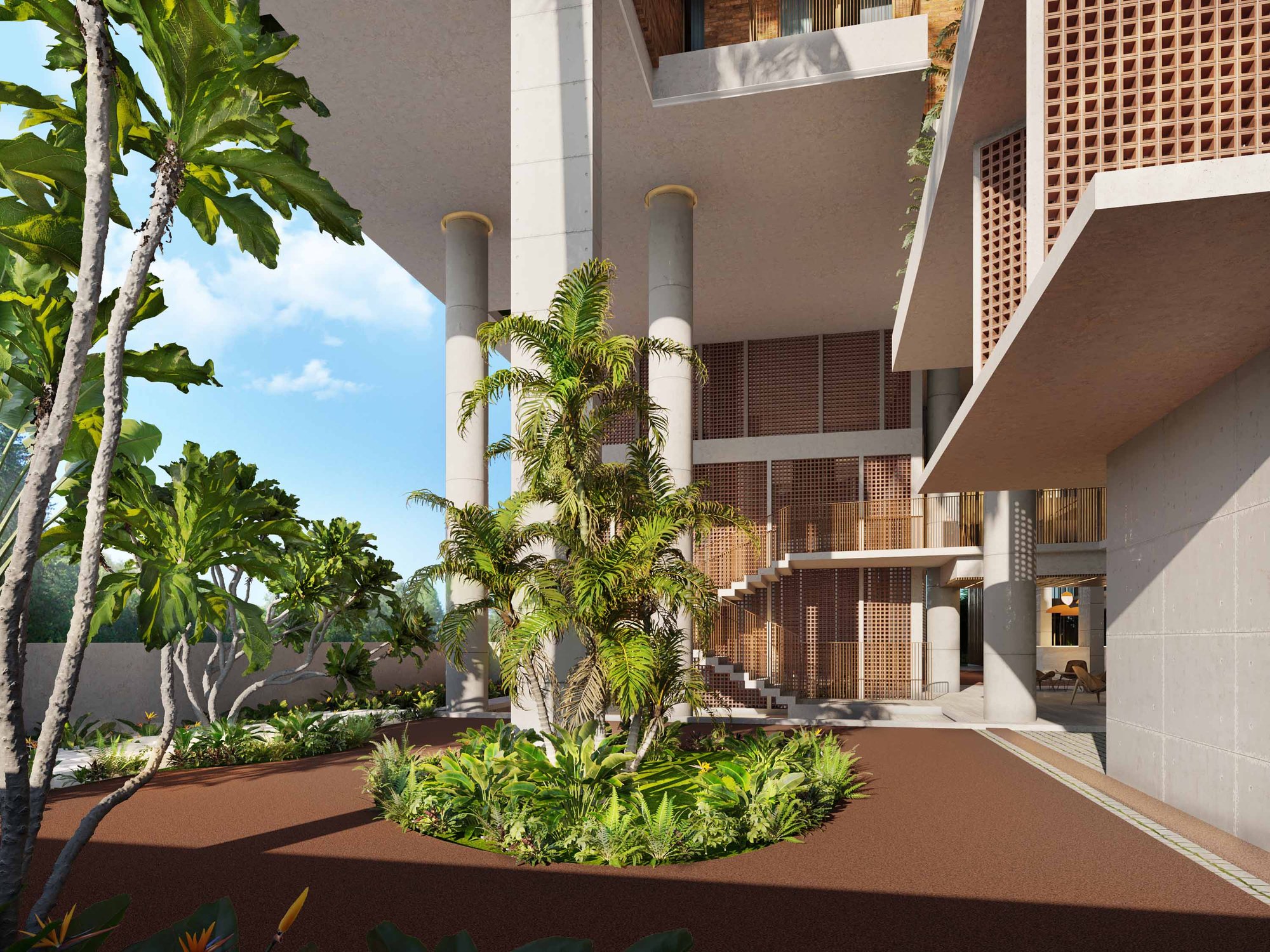
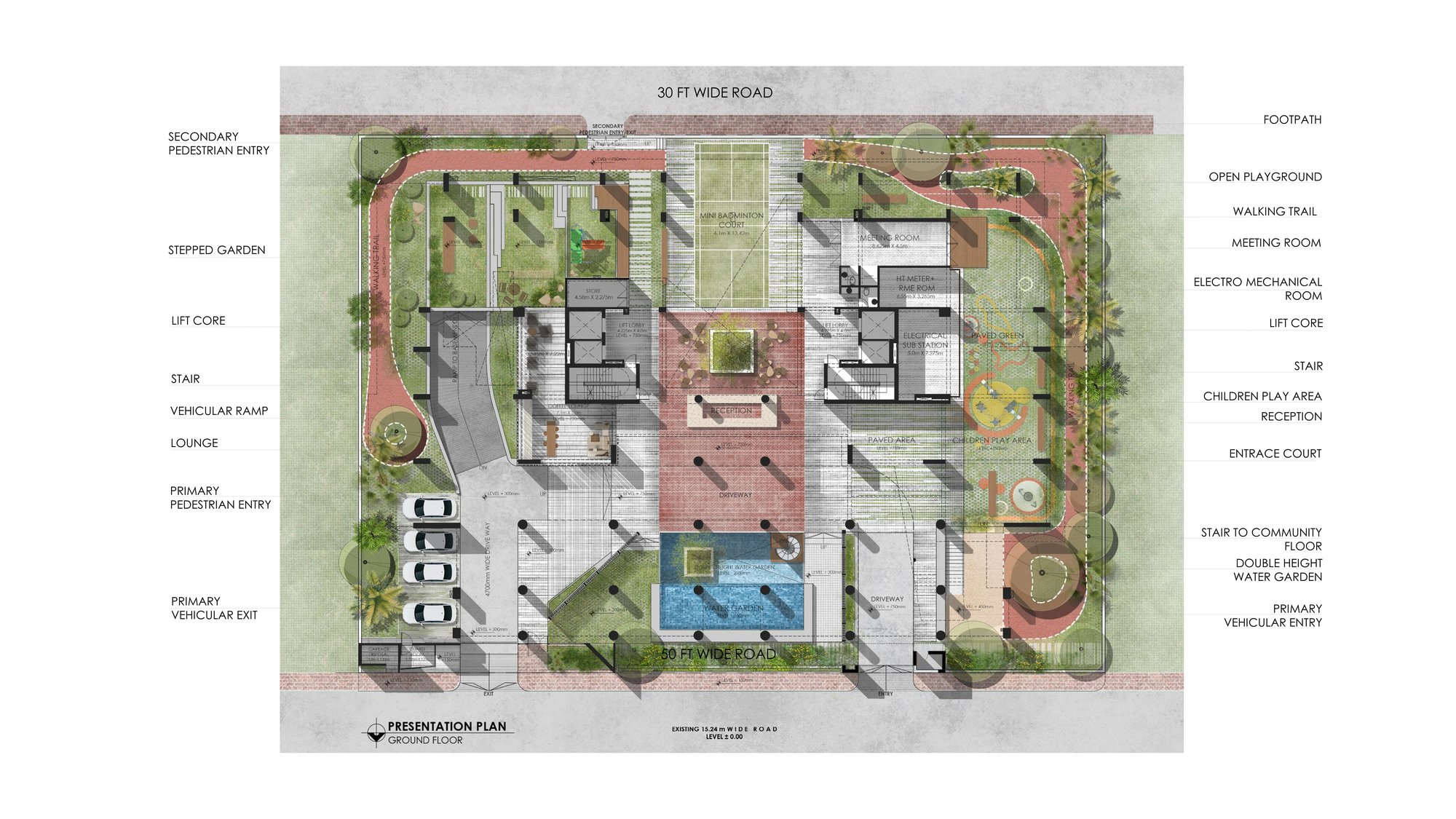
The ground floor is designed as a lofty, triple-height space, creating a grand, welcoming entrance. A triple-height screen, set slightly back from the road, forms an urban transitional zone—offering a sense of arrival for passersby while maintaining privacy for the building’s users. Within the ground floor, a large open-to-sky courtyard serves as the heart of the space, featuring a sculptural tree, a children’s play area, a mini badminton court, walking trails, and seating and resting spaces. An interior lounge adds comfort and social interaction, while a double-height water fountain connects the basement to the ground floor, allowing natural light to pour into the lower level.
The landscaping is carefully curated with local fruit and flowering trees, designed to evoke childhood memories and create spaces where people can grow alongside nature, building lasting experiences and connections. The combination of open spaces, playful elements, and thoughtful greenery makes the ground floor not just an entry, but a vibrant, living part of the building.
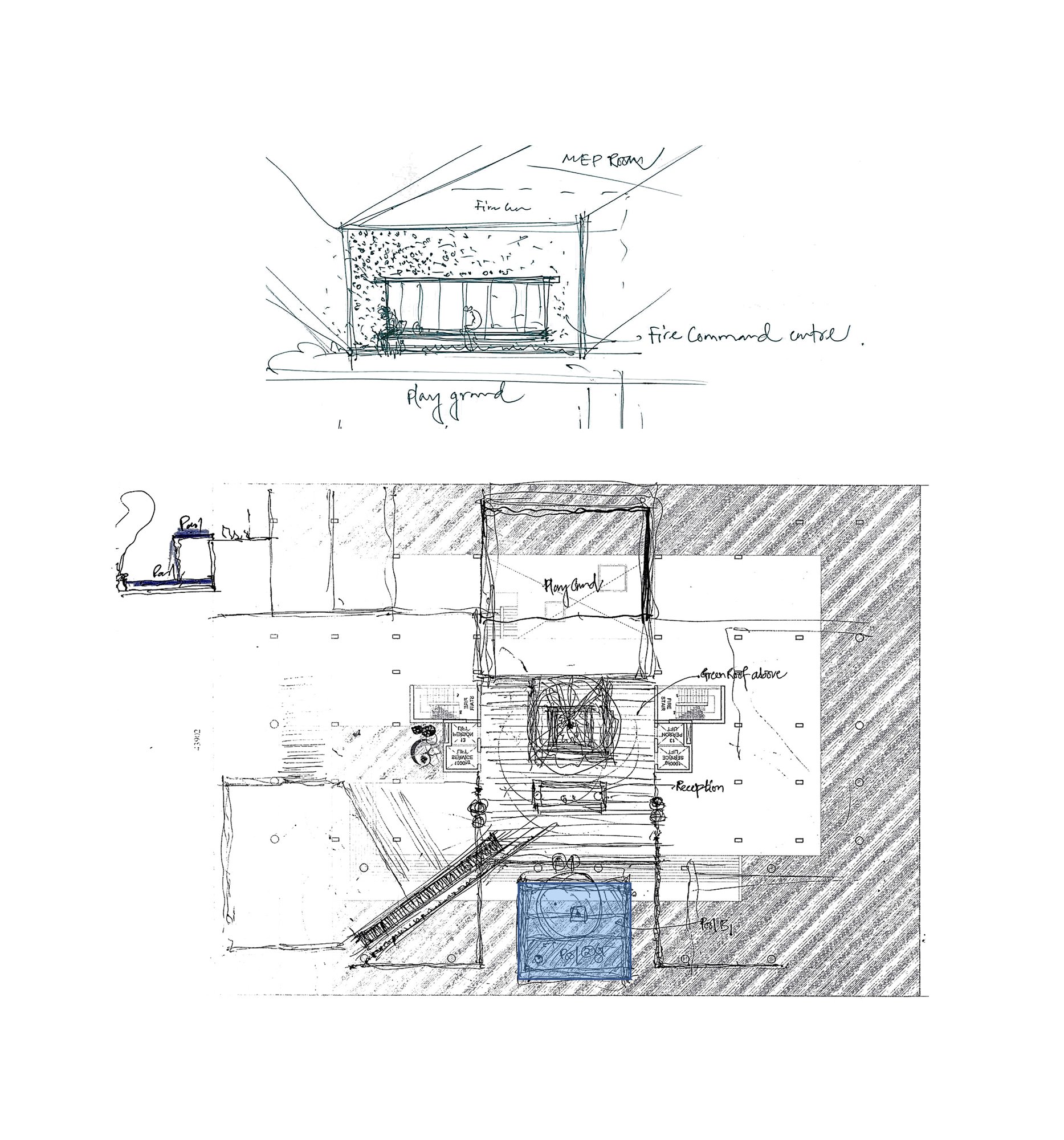
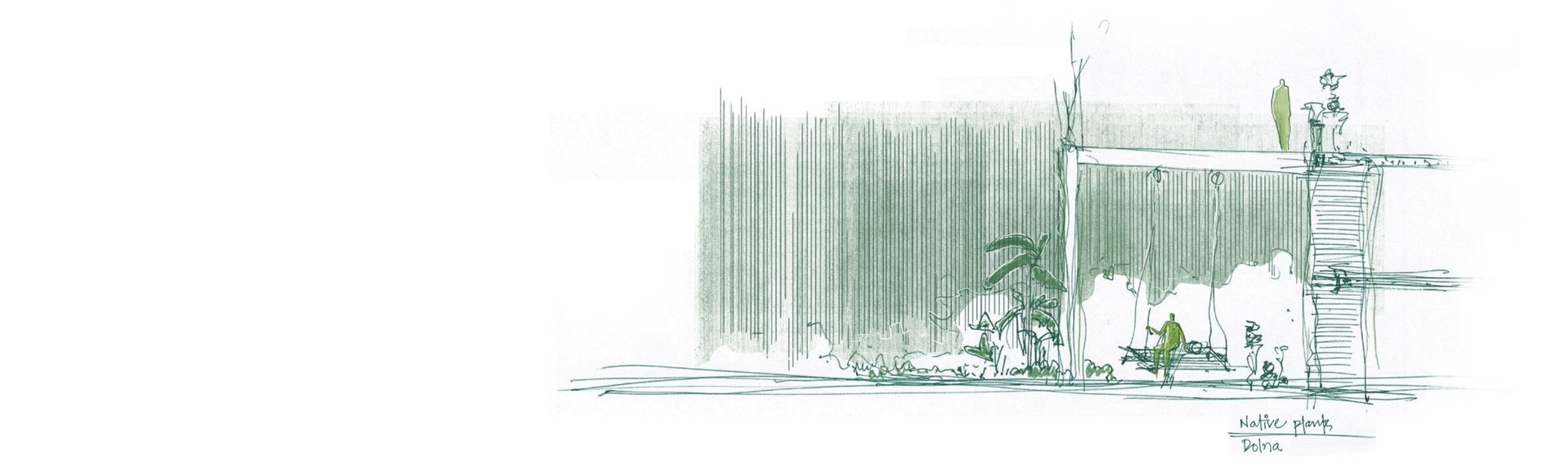
In this project, even the essential service spaces, such as the MEP room and fire command center are thoughtfully integrated into the overall architectural composition rather than being left as isolated technical zones. The façades of these functional areas are transformed into inviting green seating zones, enhancing both accessibility and visual appeal.
A reflective waterbody anchors the entrance sequence, designed to be experienced from both the ground floor and the basement level. This element not only creates a sensory connection between floors but also enriches the arrival experience through its play of light and reflection. The vertical slit adjoining the waterbody introduces natural light into the basement, ensuring that even the lower levels feel open, bright, and connected to the building’s landscape narrative.
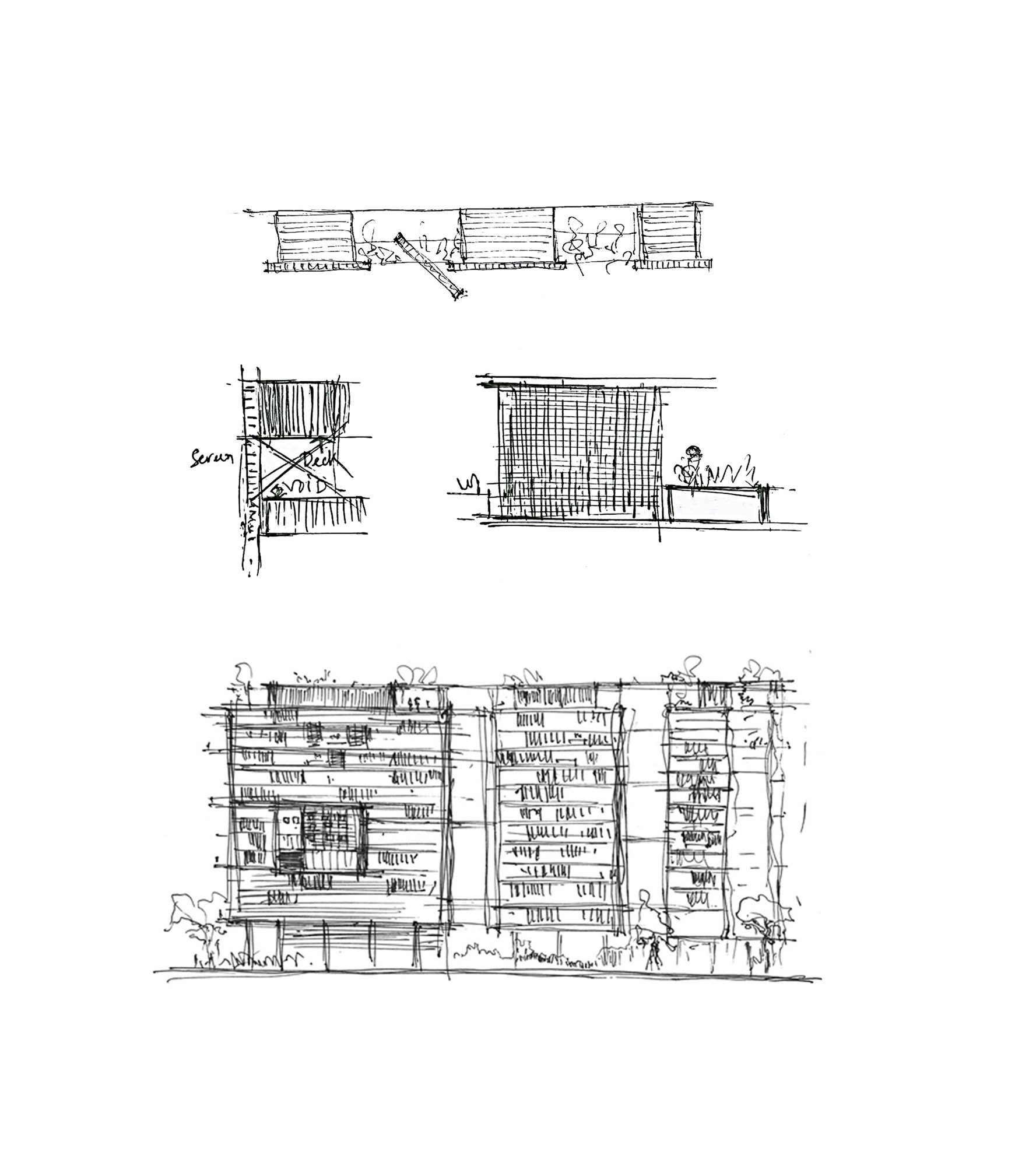
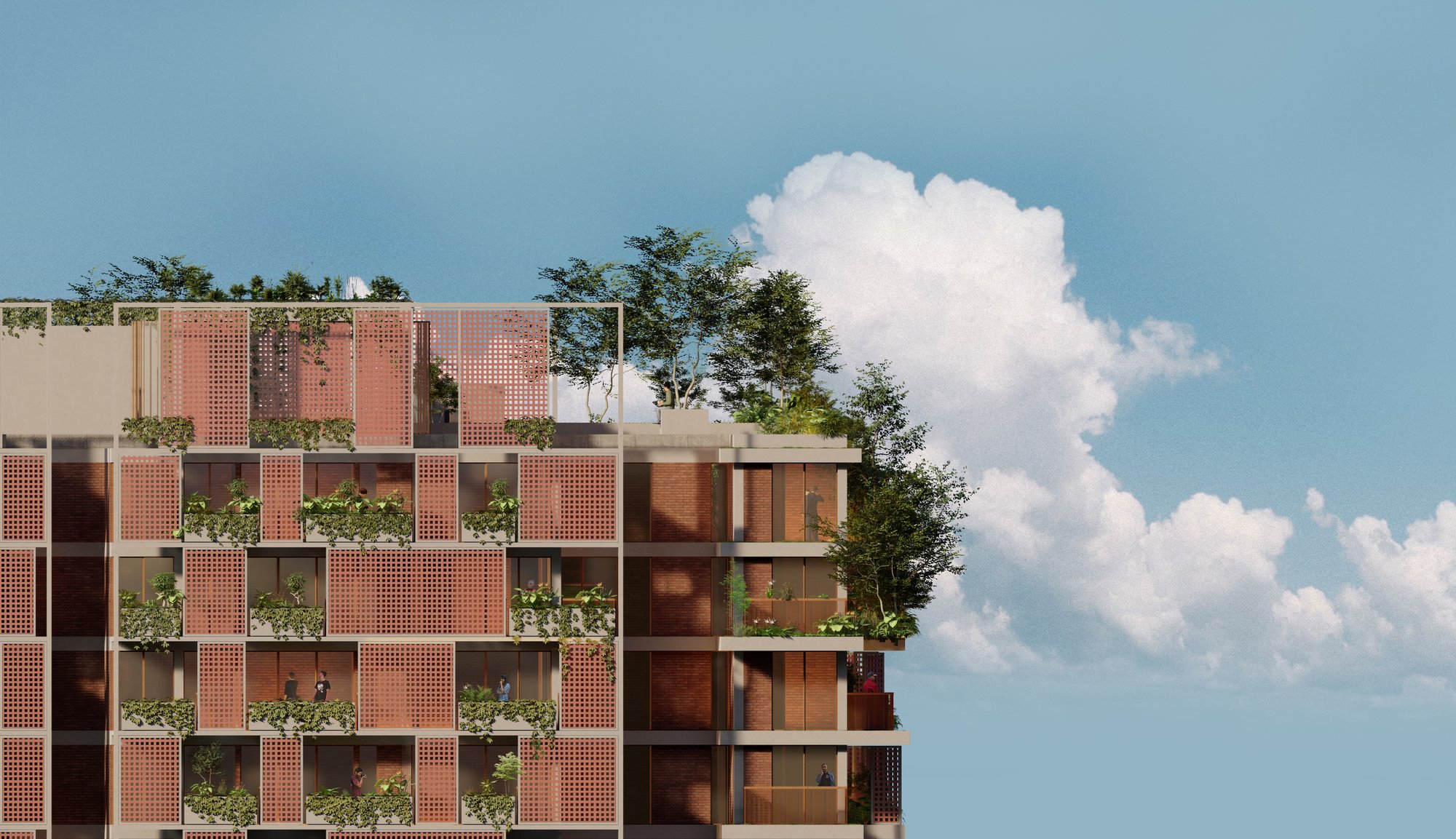
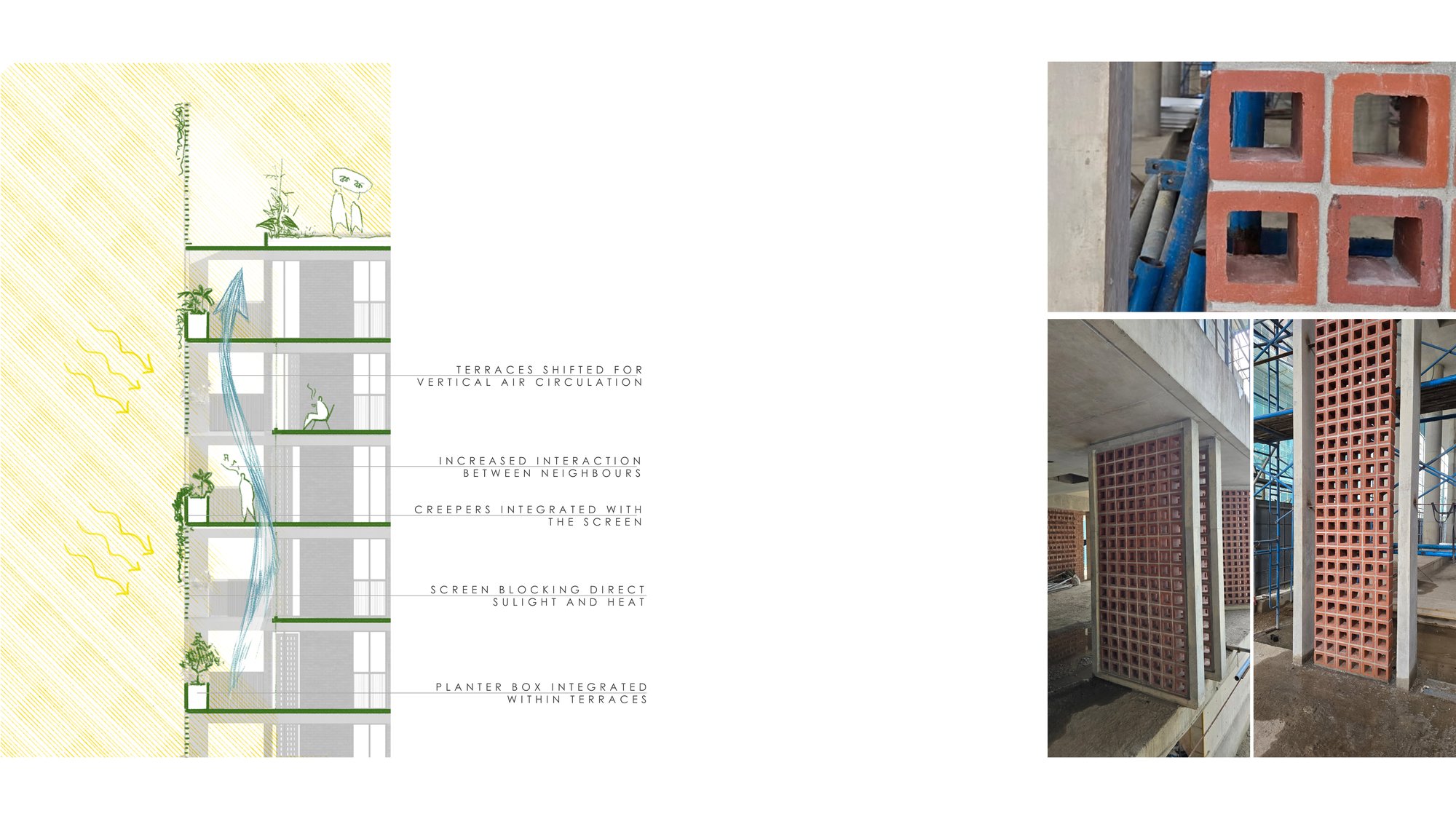
Jali screens are employed on the façade most prominently along the east and west elevations—to filter intense sunlight and mitigate heat and glare. These perforated screens serve as both a climatic and social device, functioning as privacy curtains that allow residents to engage with the outdoors in comfort and seclusion.
The terrace balconies are thoughtfully staggered to enhance vertical air circulation while encouraging visual and social interaction among neighboring residents. Each balcony integrates planter boxes and green screens with climbing creepers, forming a living façade that softens the building’s structure. This interplay of vegetation and shading elements establishes a comfortable microclimate, reduces heat absorption, and visually blurs the line between built form and natural landscape.
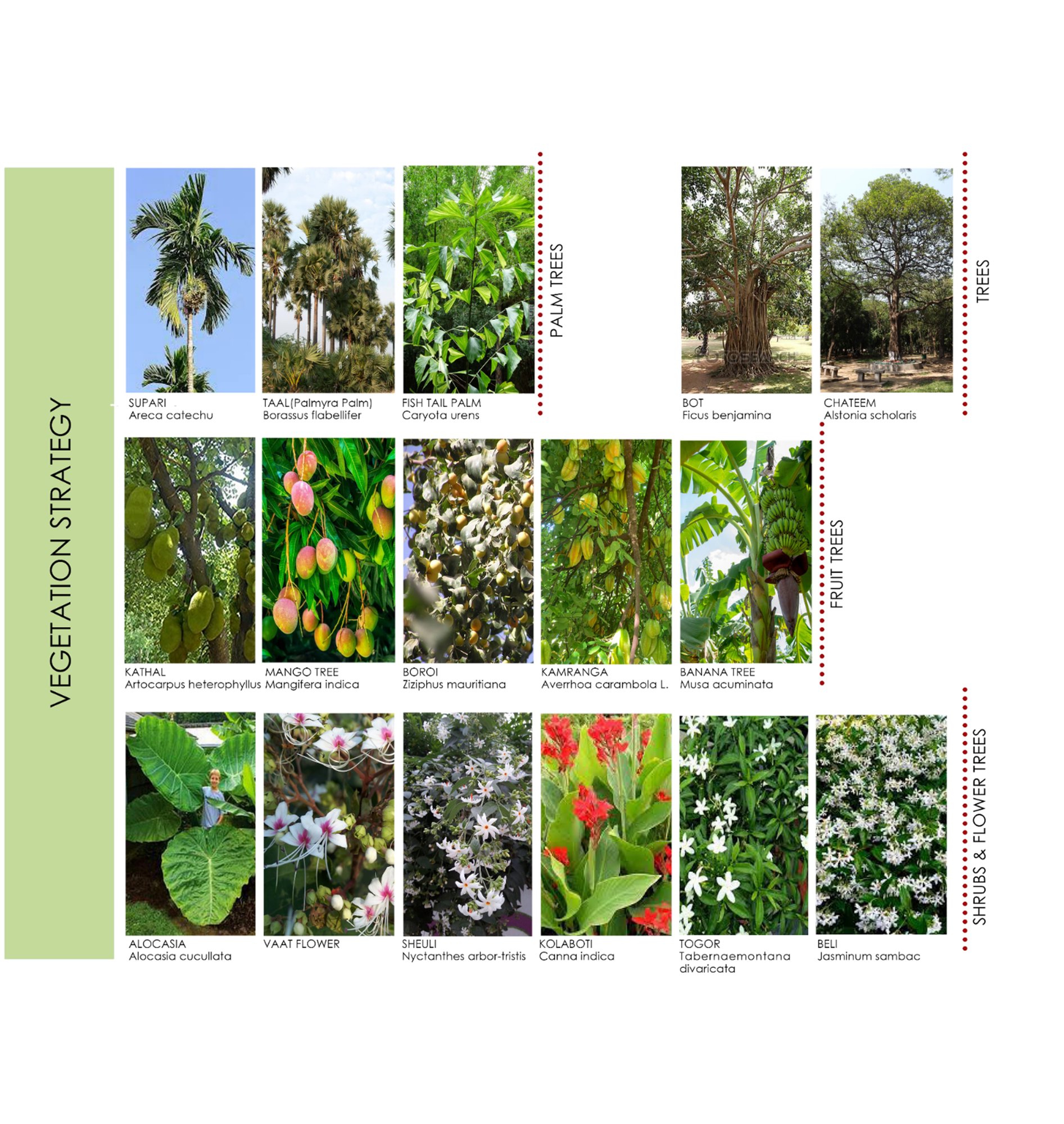
Local trees and plants are carefully positioned throughout the site, creating a thriving ecosystem that grows in harmony with its surroundings. Each tree is chosen not only for its ecological role but also for its cultural and emotional significance, evoking childhood memories and connecting generations. As children play and grow alongside these trees, their experiences and memories become intertwined with the life of the landscape. These plants engage our senses—fragrant blossoms awaken the nose, rustling leaves soothe the ears, and vibrant foliage delights the eyes—while their seasonal rhythms mirror the passage of time. They respond and reciprocate, participating in a dynamic exchange that brings the compound to life. In this way, the landscape becomes more than greenery; it transforms into a living, breathing presence, nurturing memories, celebrating culture, and reflecting the essence of its place.